


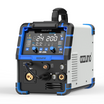
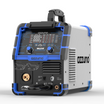
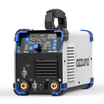

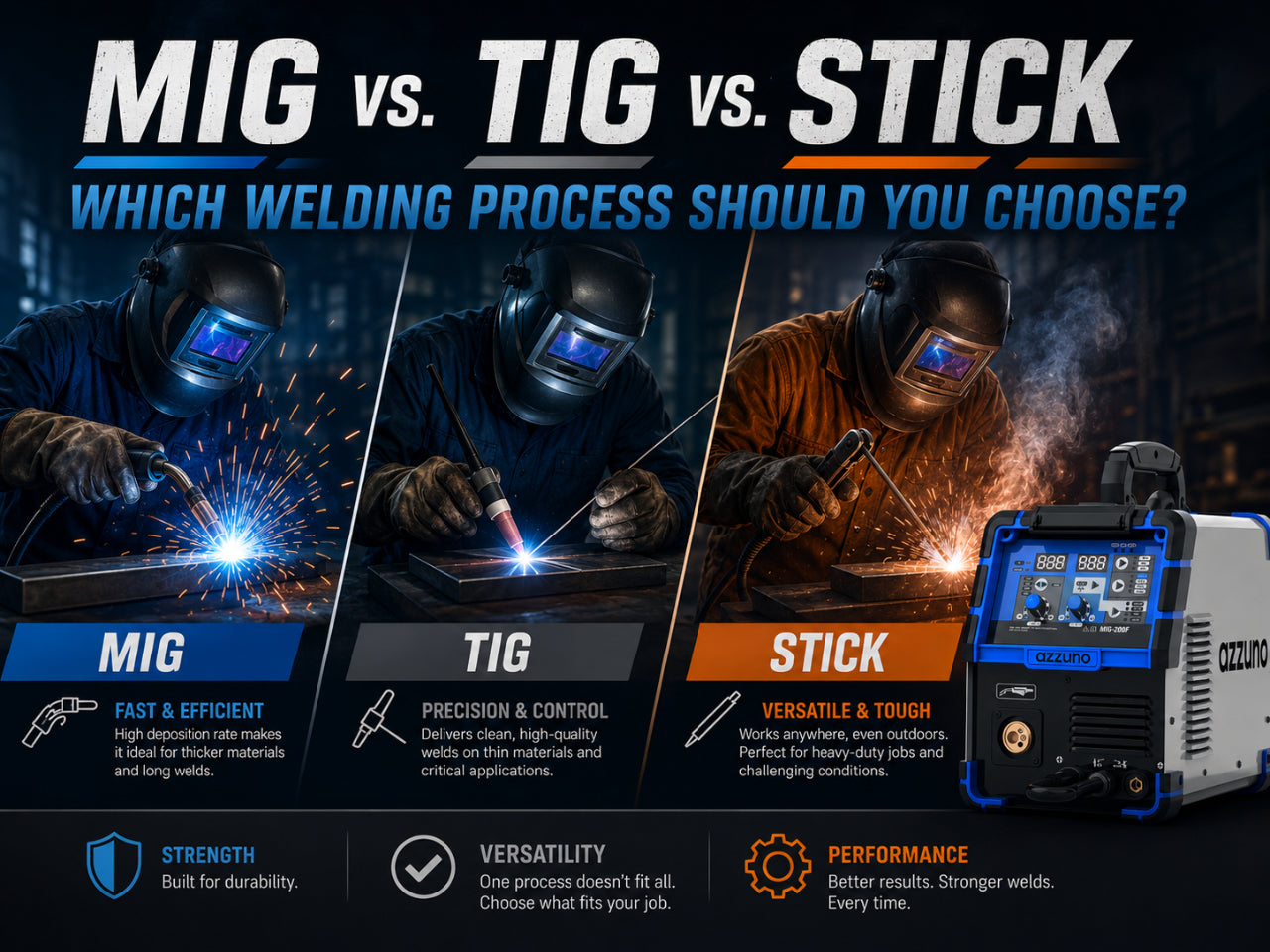
Choosing between MIG, TIG, and Stick welding isn't about finding the "best" process—it’s about matching the right tool to your specific job. Whether you’re a hobbyist fixing a gate or a professional fabricator building a roll cage, each method has its own logic and learning curve.
Today, many users opt for multi-process welders that house all three functions. But to use them effectively, you need to understand where each one shines.
1. MIG Welding: The "Point-and-Shoot" Workhorse
MIG (Metal Inert Gas) is the go-to for speed and ease of use. It uses a motor-driven wire electrode that feeds automatically through the torch. Because the machine handles the filler material for you, you can focus entirely on your travel speed and torch angle.
Why It’s the Industry Standard for Speed:
-
Beginner-Friendly: Most people can lay a functional bead within a few hours of practice.
-
High Efficiency: Continuous wire feeding means no stopping to swap rods, making it ideal for long joints.
-
Versatility: Handles everything from thin auto body panels to thick structural steel.
Best Real-World Applications:
-
Automotive Repair: Floor pans, exhaust hangers, and bodywork.
-
Home Fabrication: Custom furniture, utility trailers, and general DIY.
-
Production Shops: Where "inches per minute" matters for profitability.
Tech Note: You’ll often hear about Flux-Core (FCAW). This is a variation of MIG that doesn't require a gas tank, making it a "suitcase welder" favorite for outdoor repairs where wind would blow away your shielding gas.
2. TIG Welding: Surgical Precision
TIG (Tungsten Inert Gas) is the most refined welding process. It uses a non-consumable tungsten electrode to create the arc while you manually dab a filler rod into the puddle with your other hand. It requires high-level hand-eye-foot coordination.
The Professional’s Choice for Quality:
-
Maximum Control: Real-time heat adjustment via a foot pedal allows you to weld paper-thin metals without burn-through.
-
Visual Excellence: Produces the iconic "stack of dimes" bead with zero spatter and minimal smoke.
-
Exotic Metals: The only reliable choice for high-end stainless steel, aluminum, and titanium.
Best Real-World Applications:
-
Precision Fabrication: Aerospace parts, custom motorcycle manifolds, and aluminum radiators.
-
Sanitary Work: Stainless piping for breweries or food-grade equipment.
-
Artistic Metalwork: Where the weld itself needs to look like a piece of art.
3. Stick Welding: The Rugged Specialist
Stick (MMA/SMAW) is the oldest and simplest form of welding. It uses a consumable electrode "stick" coated in flux. It’s dirty, it’s sparky, but it’s incredibly reliable in harsh conditions.
Built for the Elements:
-
Outdoor Performance: Unlike MIG or TIG, Stick welding doesn't care about the wind. The flux on the rod creates its own protection.
-
Forgiving on Dirt: It can "bite" through rust, paint, and scale that would ruin a TIG weld.
-
No Gas Required: Just the machine, the leads, and a box of rods.
Best Real-World Applications:
-
Farm & Field Repair: Fixing a broken tractor in a muddy field.
-
Structural Steel: Heavy-duty beams, construction sites, and bridges.
-
Thick Materials: When you need deep penetration on 1/2" steel plates.
MIG vs. TIG vs. Stick: At a Glance
| Feature | MIG | TIG | Stick |
| Ease of Learning | Very Easy | Difficult | Moderate |
| Welding Speed | High | Low | Moderate |
| Weld Appearance | Clean | Aesthetic/Perfect | Rough (Needs Chipping) |
| Outdoor Use | Poor (unless Flux-Core) | Poor | Excellent |
| Precision | Moderate | Extreme | Low |
Frequently Asked Questions
Q1: Which process is best for beginners?
A1: MIG is the clear winner. The automated wire feed reduces the variables you need to manage. Modern Synergic MIG welders simplify this even further by automatically adjusting voltage when you change your wire speed.
Q2: What is the best way to weld Aluminum?
- TIG: Best for thin aluminum and high-detail work.
- Pulse MIG: A modern alternative for thick aluminum. It offers the speed of MIG but mimics the heat control of TIG, significantly reducing spatter.
Q3: Why are Multi-Process machines taking over?
A3: Instead of cluttering a garage with three different units, a Multi-Process Welder (like those supporting HF TIG, MIG, and Plasma Cutting) offers a "Swiss Army Knife" solution. It saves space and allows you to switch from a precision TIG project to a heavy Stick repair in seconds.
Final Thoughts
If you want to get projects done quickly, buy a MIG welder. If you want to master the art of metal fabrication and work with thin alloys, invest the time in learning TIG. If you need to fix a fence in a windy pasture, a Stick welder is your best friend.
For most modern fabricators, the answer is a machine that does all three. Having the flexibility to choose the right proc

Leave a comment
This site is protected by hCaptcha and the hCaptcha Privacy Policy and Terms of Service apply.