


You don't need to spend $2,000 to get a welder that actually lays decent beads. The sub-$500 segment has matured massively thanks to inverter technology—machines that weigh under 30 pounds and plug into a standard wall outlet now perform better than the industrial units from 15 years ago.
But there's a catch: the same market that's brought us affordable inverter welders has also flooded Amazon with cheap black boxes that promise the world and deliver frustration. After comparing specs, real-world performance, and user feedback across the budget MIG category, here's what actually holds up in 2026.
What $500 Gets You in 2026: The Reality Check
Here's the honest breakdown of what to expect at this price point:
| Spec Range | Entry-Level ($100-250) | Mid-Range ($250-400) | Upper-Budget ($400-500) |
|---|---|---|---|
| Max Amperage | 130-155A | 180-200A | 140-200A |
| Voltage | 110V only | 110V or 110/220V dual | 110V or dual voltage |
| Processes | Flux core only | MIG + Flux core + 1 other | Multi-process (3-4 modes) |
| Duty Cycle | 20-30% @ max amp | 30-60% @ max amp | 30-60% @ max amp |
| Wire Feed | Fixed speed | Adjustable, some synergic | Smooth, adjustable |
| Weight | 8-15 lbs | 20-35 lbs | 45-60 lbs |
| Build Quality | Plastic housing, basic internals | Metal housing, decent components | Industrial-grade components |
For most home users, the $250-400 sweet spot delivers the best balance of capability and reliability. The very cheapest units often share the same factory with multiple brand names and lack proper thermal protection—skip these unless you enjoy buying replacement parts.
Top 5 Best MIG Welders Under $500 in 2026
1. AZZUNO MIG 200 All-in-One — Best Value Multi-Process

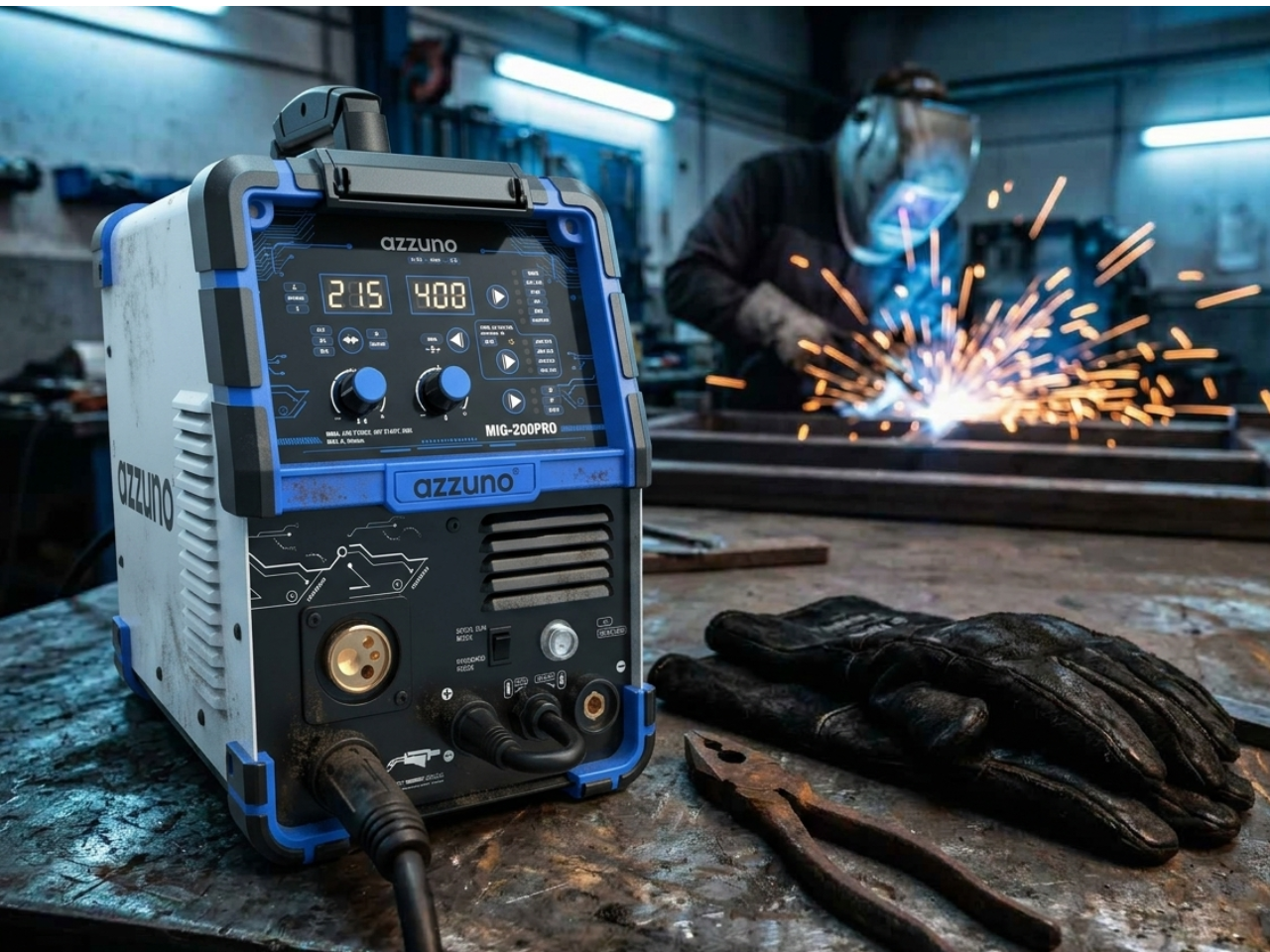
Price: ~$499 | Amps: 200A max | Voltage: 110V/220V dual | Weight: ~30 lbs
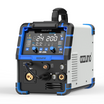
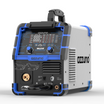
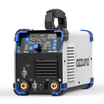
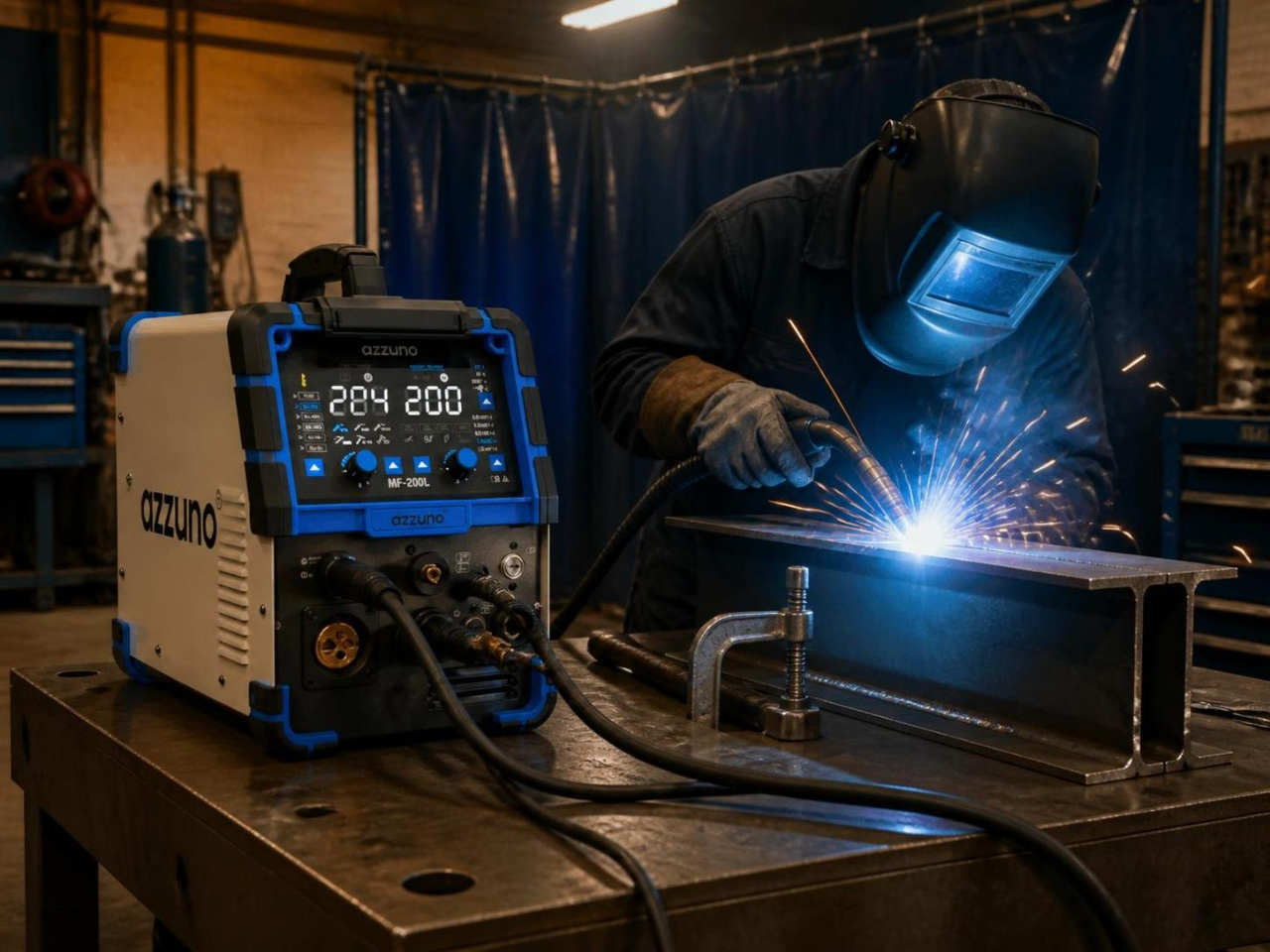
If you want one machine that handles MIG, flux core, stick, and even some TIG work without remortgaging your house, the AZZUNO MF-200L sits at the sweet spot of the market. The dual-voltage design means it runs on your standard 110V garage outlet for light work, then you can swap to 220V when you need full 200A for thicker materials.
The synergic control system automatically matches wire feed speed to voltage based on material thickness. Set the dial to your material, and the machine handles the rest. That's not a luxury feature at this price—most competitors charge $150+ more for the same capability.
Real-world users report pushing through 1/4" steel without issues on 220V, and the built-in spot weld timer is a genuine help for auto body work. The 2-year warranty backs up what the specs suggest: this machine is built to last.
Who it's for: The user who wants flexibility without a massive upfront investment. You might start with flux core in your garage, then add gas MIG and stick capability as your skills grow—all without buying separate machines.
Check current price: AZZUNO MF-200L on azzunotools.com
2. Hobart Handler 140 — Best Overall Reliability
Price: ~$419-550 | Amps: 25-140A | Voltage: 115V | Weight: 57 lbs
Hobart has been building welders in the USA since 1962, and the Handler 140 carries that industrial DNA. The transformer-based design (yes, transformer, not inverter) trades portability for bulletproof reliability. You won't find a more proven feed mechanism in this price range.
The 140-amp output handles most home garage projects—trailer hitches, farm equipment repairs, custom fabrication. It plugs into any standard 115V outlet and consistently pulls clean, spatter-free beads on materials from 24-gauge sheet metal up to 3/16" steel.
The 5/3/1 warranty (5 years on transformer, 3 years on gun, 1 year on accessories) tells you Hobart stands behind this machine. Professional welders often cite the Handler 140 as the machine they learned on, then bought another one for their shop.
Who it's for: The buyer who prioritizes proven reliability over flashy features. If you want to set it up once and not think about it for the next decade, this is your machine. The weight (57 lbs) means it lives in one spot rather than traveling.
3. Lincoln Electric 140HD — Easiest Setup for Beginners
Price: ~$399 | Amps: 30-140A | Voltage: 115V | Weight: 46 lbs
Lincoln built the 140HD specifically for users who find welding intimidating. The patent-pending Quick Set tension adjustment means you dial in wire tension in one rotation instead of the usual five. Combined with the simple two-knob control panel, you'll be laying beads within 15 minutes of opening the box.
The 140HD uses Lincoln's TruArc Technology for smooth, consistent wire feed even with cheaper wire brands. That matters when you're starting out and don't want to spend $40 on premium ER70S-6 just to get reliable feeding.
At 46 pounds with a built-in handle, it moves between workstations more easily than the Hobart. The infinite voltage adjustment gives you finer control than stepped selectors, which helps when you're dialing in settings for different material thicknesses.
Who it's for: The complete beginner who wants the shortest path to successful welds. If you've never touched a welder before and want the gentlest learning curve, this is where to start. Experienced users might find the simple controls limiting, though.
4. YesWelder MIG-205DS — Best Dual-Voltage Budget Option
Price: ~$299-450 | Amps: 30-205A | Voltage: 110/220V | Weight: 30 lbs
YesWelder carved out a reputation for packing serious capability into budget-friendly packages, and the MIG-205DS exemplifies that approach. For under $350, you get dual-voltage operation (run it on 110V for light work or 220V for full 205A output), synergic control, and a spool gun-ready design.
The 30-pound weight makes it genuinely portable—throw it in a truck bed for on-site farm repairs or take it to a friend's shop. Dual-voltage capability in this weight class used to require spending $600+, so YesWelder's pricing undercuts the market significantly.
User reports note the wire feed mechanism holds up to regular use better than other budget brands, though some users report needing to adjust tension more frequently than with Hobart or Lincoln units. The digital display is a nice touch for monitoring settings at a glance.
Who it's for: The budget-conscious buyer who needs dual-voltage flexibility. If your shop has a 220V outlet (or you plan to add one), this delivers the most amperage per dollar in the under-$500 category.
5. Forney Easy Weld 140 MP — Best Multi-Process Starter
Price: ~$300-400 | Amps: 10-140A | Voltage: 120V | Weight: 24 lbs
Forney has served industrial and commercial customers since 1932, and the Easy Weld 140 MP brings that experience to the home user. The 24-pound weight makes this the most portable multi-process welder available—carry it with one hand, set it on a shelf, or transport it in a compact car.
The three-process capability (MIG, stick, DC TIG) lets you experiment with different welding methods without buying separate machines. MIG handles your bread-and-butter work, stick excels outdoors in wind, and DC TIG opens doors to cleaner welds on thinner materials. That's a lot of versatility from a machine that costs less than a dedicated TIG setup.
The stepped selector controls trade some adjustment flexibility for simplicity—ideal when you're learning and want clear, predictable settings rather than infinite fine-tuning. The manual controls also mean fewer things to troubleshoot when something goes wrong.
Who it's for: The explorer who wants to try different welding processes. If you're not sure whether you'll stick with MIG or want to branch into stick welding for outdoor farm work, this gives you room to experiment without committing to one process.
How to Choose: Quick Decision Guide
Not sure which one fits your situation? Here's the fast path:
| Your Situation | Best Pick | Why |
|---|---|---|
| On a tight budget, need versatility | AZZUNO MIG-200L | Most features per dollar, dual voltage |
| Reliability is non-negotiable | Hobart Handler 140 | Transformer durability, proven track record |
| First time welding, want easy setup | Lincoln 140HD | Quick Set tension, simplest controls |
| Need power for thick materials | YesWelder MIG-205DS | 205A max output, dual voltage |
| Want to try multiple processes | Forney 140 MP | MIG + Stick + TIG in 24 lbs |
Key Specs Comparison Table
| Welder | Max Amps | Voltage | Weight | Processes | Warranty |
|---|---|---|---|---|---|
| AZZUNO MIG-200L | 200A | 110/220V | ~30 lbs | 4-in-1 MIG/Flux/TIG/Stick | 2 years |
| Hobart Handler 140 | 140A | 115V | 57 lbs | MIG/Flux Core | 5/3/1 years |
| Lincoln 140HD | 140A | 115V | 46 lbs | MIG/Flux Core | 3 years |
| YesWelder MIG-205DS | 205A | 110/220V | 30 lbs | 3-in-1 MIG/Flux/TIG | 1 year |
| Forney 140 MP | 140A | 120V | 24 lbs | 3-in-1 MIG/Stick/TIG | 90 days |
What to Look for in a Budget MIG Welder
Before you buy, keep these factors in mind:
Duty Cycle
Expressed as a percentage at maximum output. A 30% duty cycle at 140A means you can weld for 3 minutes out of every 10 before the machine needs to cool. For most home users running shorter beads, 20-30% is adequate. If you're doing production welding, look for 60%+.
Wire Feed Mechanism
The single biggest failure point in budget welders. Look for machines with all-metal feed heads and adjustable tension. Inconsistent wire feed creates frustration and poor welds regardless of your skill level.
Thermal Protection
Overload and overheat protection auto-shutoff the machine before damage occurs. Budget units sometimes skip this—avoid them. A fried motherboard on a $150 welder isn't a savings.
Gas vs. Gasless
Flux core (gasless) works outdoors without wind issues but produces more spatter. Gas MIG produces cleaner welds but requires a tank and won't work in wind. Many budget machines support both—check before buying if you need flexibility.
Dual Voltage
Running 220V gives you full amperage output—critical for welding materials over 1/4". If your shop has (or could add) a 220V outlet, dual-voltage machines deliver significantly more capability without a proportional price increase.
FAQ: Common Questions About Budget MIG Welders
Q: Can a $300 MIG welder handle real welding jobs?
Yes. The gap between budget and professional machines has narrowed significantly. A $300-500 inverter welder from a reputable brand handles most home garage, farm, and light professional work without issues. The difference between a $300 and $3,000 machine shows up in duty cycle, build quality, and long-term durability—not basic capability.
Q: What's the difference between MIG and flux core welding?
MIG requires a shielding gas tank to protect the weld pool from atmospheric contamination. Flux core uses a hollow wire filled with flux compounds that generate their own protective gas and slag. Flux core works better outdoors in wind but produces more spatter. Most budget MIG welders support both methods—check the product specs before buying.
Q: Do I need 220V for serious welding work?
For light work (up to 3/16" steel in single passes), 110V is sufficient. Once you start welding 1/4" steel or doing production work, 220V makes a significant difference. Dual-voltage machines give you flexibility to start on 110V and upgrade your setup later without buying a new welder.
Q: How long do budget MIG welders last?
With proper maintenance and reasonable use, expect 5-10 years of regular service from a well-built unit. Budget machines from unknown brands might last 1-3 years. The Hobart Handler series has units still running from the 1990s. Build quality matters more than brand name when predicting lifespan.
Q: Can I weld aluminum with a budget MIG welder?
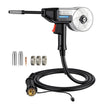
Standard MIG welders require a spool gun to feed aluminum wire without bird-nesting. Budget machines often lack spool gun compatibility or sufficient amperage for effective aluminum MIG. If aluminum welding is a priority, look for spool gun-ready models with at least 180A output on 220V.
Q: Is synergic control worth paying extra for?
If you're new to welding, yes. Synergic control automatically matches wire feed speed to voltage based on your material selection, reducing the learning curve significantly. Experienced welders often prefer manual adjustment for fine-tuning, but the simplified setup saves frustration during your first months.
The Bottom Line
The sub-$500 MIG welder market has matured to the point where you get serious capability without serious money. Your choice comes down to priorities:
- Most versatile for the money: AZZUNO MIG-200L delivers dual-voltage, multi-process capability, and smart features at a price that doesn't require justification.
- Maximum reliability: Hobart Handler 140 earns its premium through proven durability and industry-standard support.
- Easiest learning curve: Lincoln 140HD gets you welding faster than any competitor.
- Best power-to-price ratio: YesWelder MIG-205DS delivers 205A at prices that used to buy half the machine.
- Most portable multi-process: Forney 140 MP fits three welding methods in a 24-pound package.
Any of these five machines will serve you well for years. Pick based on your primary use case, available voltage, and whether portability matters for your work.


Leave a comment
This site is protected by hCaptcha and the hCaptcha Privacy Policy and Terms of Service apply.