



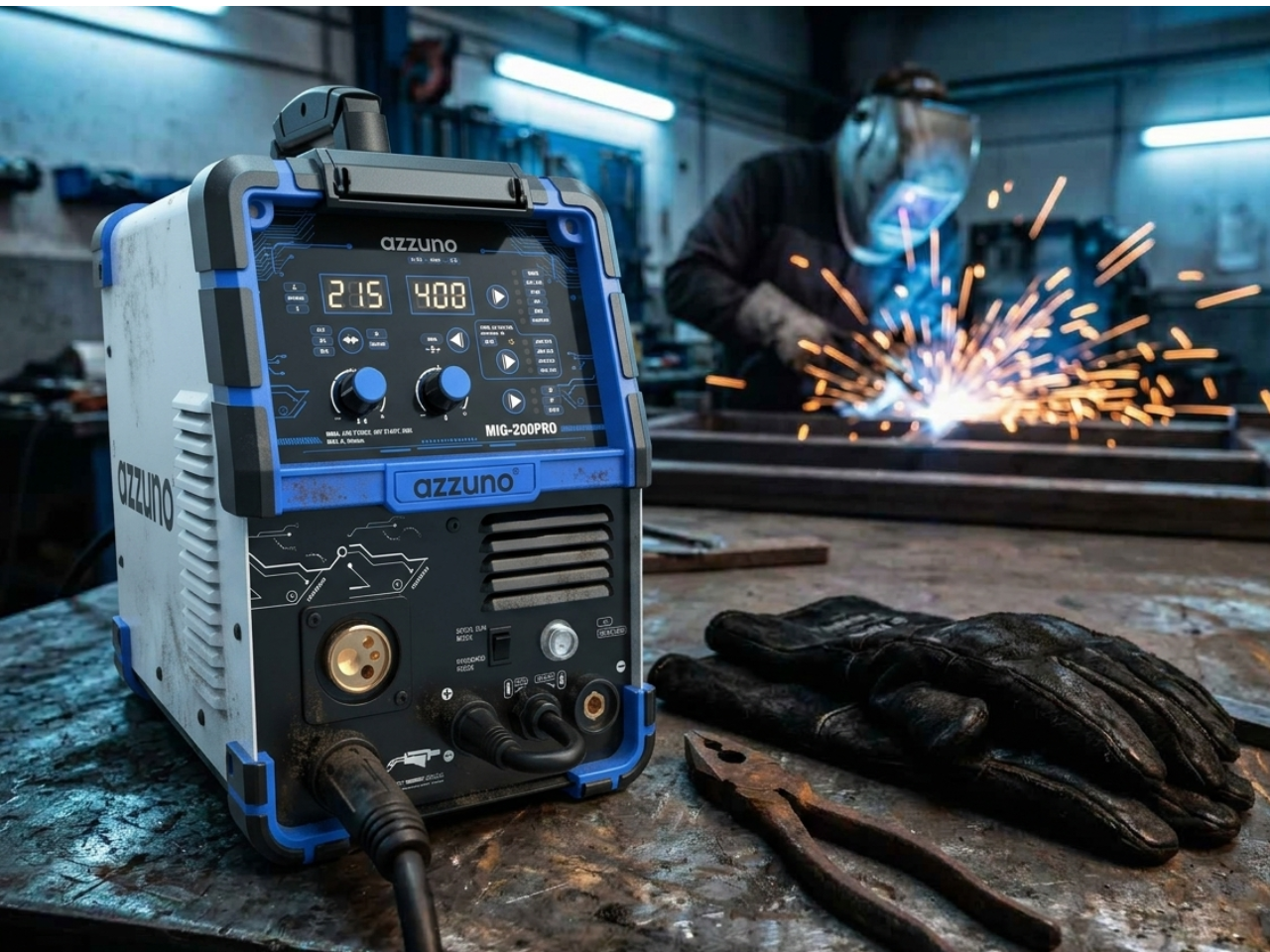
Let’s be honest: walk into any tool shop or browse online today, and every machine looks like it was designed by a NASA engineer. They all claim to be "professional grade," but once you try to lay a bead on a rusty 1/4-inch plate in your driveway, most of them choke.
In 2026, the welding market is flooded with cheap, plastic-cased inverters that promise the world but deliver nothing but frustration. The game has shifted from heavy, old-school transformers to high-frequency inverters and "Synergic" logic. But before you drop $500 or $1000, you need to understand what actually matters when the helmet goes down and the sparks fly. This is the no-BS guide to picking a machine that won't let you down.

1. The "Dual Voltage" Trap: Why 110V is Only Half the Story
Most beginners see a "110V" sticker and think it’s a win because they can plug it into any wall outlet. Here is the cold, hard truth: 110V is for hobbyists; 220V is for builders.
If you are serious about anything thicker than a car body panel (typically 1/8-inch or 3mm), you need a machine that handles 110V/220V Dual Voltage. On a standard 110V household circuit, you are limited by a 20A breaker. This means the machine can only output about 130A-140A maximum. At that level, you’ll get "cold" welds that look like a pile of bird droppings—they sit on top of the metal instead of melting into it.
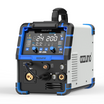
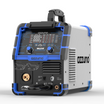
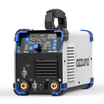
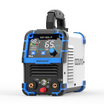
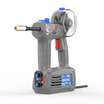
A real 2026-spec machine, like our Azzuno 200A series, uses an auto-sensing inverter. It knows when you’ve plugged into 220V and unlocks the full 200 Amps of power. This is the difference between a weld that holds a trailer together and a weld that snaps the first time you hit a pothole.
Pro Tip: Always check if the machine comes with a high-quality 50A to 15-20A adapter cord. If the adapter feels like a cheap extension cord, the internal components probably are, too.

2. Synergic Control: Genius or a Crutch?
Ten years ago, you had to be a math whiz to weld. You’d spend ten minutes squinting at a faded chart taped inside the wire spool door, trying to guess the wire speed and voltage for 14-gauge steel. Today, we have Synergic Control.
- How it works: You select your wire diameter (0.030 or 0.035) and your material, and the machine’s "brain" pre-sets the voltage and wire speed for you.
- The Reality Check: For 90% of jobs, this is a lifesaver. It lets you get to work in seconds. However, the "AI" in most cheap welders is often wrong.
In 2026, you should never buy a machine that ONLY has synergic mode. You need a Manual Override. Why? Because every welding environment is different. Maybe your extension cord is 50 feet long and causing a voltage drop, or maybe you're welding overhead and need to turn the wire speed down slightly to keep the puddle from falling on your face. If the machine won't let you tweak the settings, it’s a toy, not a tool.

3. The "Off-Grid" Edge: Welding with Portable Power Stations
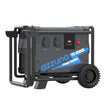
This is the single biggest shift in 2026. We are moving away from noisy, heavy gas generators. Modern LiFePO4 Power Stations have reached a point where they can actually run a high-efficiency MIG welder. But there’s a catch: Power Factor Correction (PFC).
If you plan to do mobile repair or work on a farm fence far from an outlet, your welder needs to be "battery-friendly." Cheap inverters create "electrical noise" that can trip the safety sensors on a portable power station.
We’ve spent hundreds of hours testing the Azzuno lineup with industrial-grade stations. Because our machines use high-end IGBT (Insulated Gate Bipolar Transistor) technology, they pull power smoothly. A stable 3000W station can handle a 140A-160A bead all day long. This means you can throw your welder and a battery in the back of a UTV and fix a gate in the middle of a 50-acre field. No gas, no exhaust, no noise.

4. Don’t Ignore the Wire Feed System
Everyone talks about "Amps," but nobody talks about the Wire Drive Motor. This is the heart of a MIG welder.
Open the side door of that "budget" welder you saw on a random marketplace. Is the drive roll mechanism made of plastic? If yes, run away. Plastic drive systems flex under heat, causing the wire to "stutter" or "bird-nest" (tangle up in a giant mess).
A professional machine must have a cast aluminum or heavy-duty metal drive system. It should also have an adjustable tensioner. If the wire doesn't feed with 100% consistency, it doesn't matter how good your settings are—your weld will be full of "pops" and "stuttering" that ruin the joint.

5. Duty Cycle: The Number They Love to Fake
You’ll see "60% Duty Cycle at 200A" on a $250 machine. It is a lie.
Duty cycle is measured over a 10-minute period. A 60% rating at 200A means you can weld for 6 minutes straight before the machine needs to cool down for 4 minutes. On a tiny, cheap machine, those internal components will melt long before the 6-minute mark.
In 2026, look for transparency. A real workhorse, like the Azzuno MIG 200 All-in-One, is built with oversized heat sinks and high-velocity fans. When we say 60%, we mean it under real-world conditions, not in a lab with the AC turned to 60 degrees. If you’re building a roll cage or a heavy-duty trailer, you cannot afford a machine that shuts down every two minutes.
6. Gas vs. Gasless (Flux-Core): The Honest Comparison
One of the most common questions I get is: "Do I really need a gas tank?"
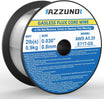
- Flux-Core (Gasless): It’s great for one thing—welding outdoors in the wind. Since the "gas" is inside the wire, the wind won't blow it away. But it creates a lot of spatter (hot metal balls flying everywhere) and a layer of "slag" that you have to chip off with a hammer. It’s dirty work.
- MIG (GMAW with Gas): Using 75/25 Argon/CO2 gas is the gold standard. It creates a beautiful, clean weld with zero cleanup. If you want to weld thin sheet metal for a car restoration, gas is mandatory.
The 2026 Rule: Buy a machine that does both. You’ll want the gas for your shop projects and the flux-core for that one time your neighbor asks you to fix his mailbox in a 20mph wind.

7. The Pulse MIG Advantage (Why the Pros are Switching)
If you’ve been looking at high-end machines, you’ve probably heard of Pulse MIG.
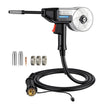
Traditionally, Pulse was only available on machines costing $3,000+. In 2026, we’ve brought this tech to the prosumer level. Pulse MIG "flicks" the metal into the joint, allowing you to weld Aluminum without a bulky spool gun and with much less heat. This prevents warping on thin panels and gives you that "TIG-like" stack-of-dimes look without the 500 hours of practice TIG requires.
If you plan on doing a lot of aluminum work or high-end fabrication, don't settle for a standard MIG. Go Pulse.
The "Azzuno Verdict" for 2026
If you’ve read this far, you realize that a welder is more than just a box that makes sparks. It’s an investment in what you can build.
If I had to recommend one "do-it-all" machine for the modern fabricator, it’s our 8-in-1 Multiprocess MIG 200. It hits every requirement we talked about:
- Dual Voltage (110V/220V)
- Metal Drive System (No plastic junk)
- Synergic with Manual Override
- Inverter Tech (Optimized for Power Stations)
- Multiprocess (MIG, Flux, Stick, and Lift TIG)
Final Pro Tip: The "Scrap Yard" School of Excellence
Before you ever touch your project car or your farm equipment, go to a local scrap yard. Buy $20 worth of "coupons" (small metal scraps of different thicknesses). Spend a whole Saturday just making mistakes on that scrap.
Find out exactly what happens when you turn the wire speed too high (you’ll feel the torch pushing your hand back) or the voltage too low (it will sound like popcorn and won't penetrate). By the time you start your real project, you’ll "hear" the perfect weld—which, by the way, should sound like sizzling bacon.
Bottom line: Buy a machine that gives you more power than you think you need today, because once you start building, your projects are only going to get bigger.

Leave a comment
This site is protected by hCaptcha and the hCaptcha Privacy Policy and Terms of Service apply.