


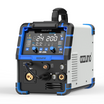
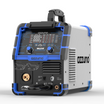
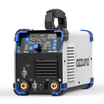
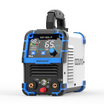

You're three fence posts deep into a ranch repair when you realize the steel gate hinge needs to come off—cleanly—before you can weld the replacement. An angle grinder throws sparks everywhere and takes ten minutes per cut. An oxy-acetylene rig needs bottles you left back at the shop. What you actually need is a portable plasma cutter that runs on whatever power you've got nearby and slices through 3/8" steel like it's cardboard.
That scenario plays out every week on farms, in home garages, and at maker spaces across the country. Portable plasma cutters have gotten lighter, cheaper, and more capable in the last few years, to the point where spending $250–$700 gets you a machine that would have cost twice that a decade ago. But "portable" means different things depending on whether you're carrying it to a truck bed, fitting it on a cluttered workbench, or hauling it through a pasture.
This guide covers five machines that earned their spots through real cutting performance, honest specs, and prices that make sense for the people who'll actually use them. I've flagged which user each machine fits best—because the right plasma cutter for a 200-square-foot maker studio isn't the same one you want strapped to an ATV.
What Actually Matters in a Portable Plasma Cutter
Before the picks, a quick rundown of the specs worth caring about. Skip this if you already know your duty cycles—come back if you're comparing numbers later.
Cutting capacity (clean cut vs. severance)
Manufacturers love quoting "maximum cut" thickness. That's the severance number—how thick a piece the machine can barely chew through at a crawl. Clean cut thickness is what you actually want. It's the thickness where you get a reasonable cut speed, minimal dross, and an edge you don't have to grind for ten minutes. As a rule, clean cut is roughly 60–70% of the severance rating.
Duty cycle
Expressed as a percentage of a 10-minute window. A 25% duty cycle at 65A means you can cut at full power for 2.5 minutes, then the machine needs 7.5 minutes of cooling. For occasional cuts—farm repairs, hobby projects—25% is usually fine. For production work, look for 50% or higher.
Dual voltage (110V/220V)
If you're working in a garage with a 220V outlet, great. But if you're running off a generator in a field or plugging into a standard household circuit, 110V capability matters. Most dual-voltage machines lose significant cutting power on 110V—check the 110V amp rating, not just the 220V number.
Pilot arc (non-touch vs. HF start)
A pilot arc lets you start the cut without touching the torch tip to the metal. This matters on painted, rusted, or expanded metal surfaces. Non-HF (non-high-frequency) pilot arc is preferred for CNC compatibility and doesn't interfere with nearby electronics. According to the American Welding Society (AWS), pilot arc technology reduces consumable wear by up to 40% compared to contact-start methods, particularly on dirty or coated surfaces.
Weight and air requirements
"Portable" ranges from 15 lbs to 35 lbs in this category. Also factor in your air compressor—most portable cutters need 4–6 CFM at 65–90 PSI. If your compressor can't keep up, you'll be stopping every 30 seconds waiting for air pressure to rebuild. OSHA standard 29 CFR 1910.252 covers compressed gas safety requirements relevant to plasma cutting operations—worth a read if you're setting up a new workspace.
Top 5 Portable Plasma Cutters for Home & Field Use
1. PRIMEWELD CUT60 — Best Overall for Serious Home Shops
Specs at a glance:
- Output: 20–60A (220V) / 20–30A (110V)
- Clean cut: up to 3/4" (19mm) mild steel
- Severance: up to 7/8" (22mm)
- Duty cycle: 60% at rated output
- Input voltage: 110/220V dual voltage
- Weight: 30 lbs
- Price: ~$699
- Arc start: Blowback pilot arc (non-HF, CNC-compatible)
The PRIMEWELD CUT60 sits at the top for one main reason: that 60% duty cycle. Most machines in this price range top out at 25%. If you're running continuous cuts on plate steel—fabricating brackets, cutting sheet for a project car, or prepping material for a CNC table—the CUT60 lets you work nearly twice as long before the thermal protection kicks in.
The blowback pilot arc is non-HF, which means no electrical interference with nearby equipment. PRIMEWELD includes both a handheld torch and CNC machine torch, which is unusual at this price point and makes the $699 price tag easier to swallow if you're planning to add a cutting table later.
On 110V, output drops to 30A—enough for sheet metal and thin stock, but don't expect to cut 1/2" plate on a household circuit. The PT60 torch uses affordable consumables widely available online.
Who it fits: Garage Mike who's building a serious home fabrication setup and wants one machine that handles both manual cuts and future CNC work. The 60% duty cycle means fewer cool-down breaks on bigger projects.
Trade-off: 30 lbs is on the heavier side for "portable." Fine for garage-to-truck, less ideal for carrying across a pasture.
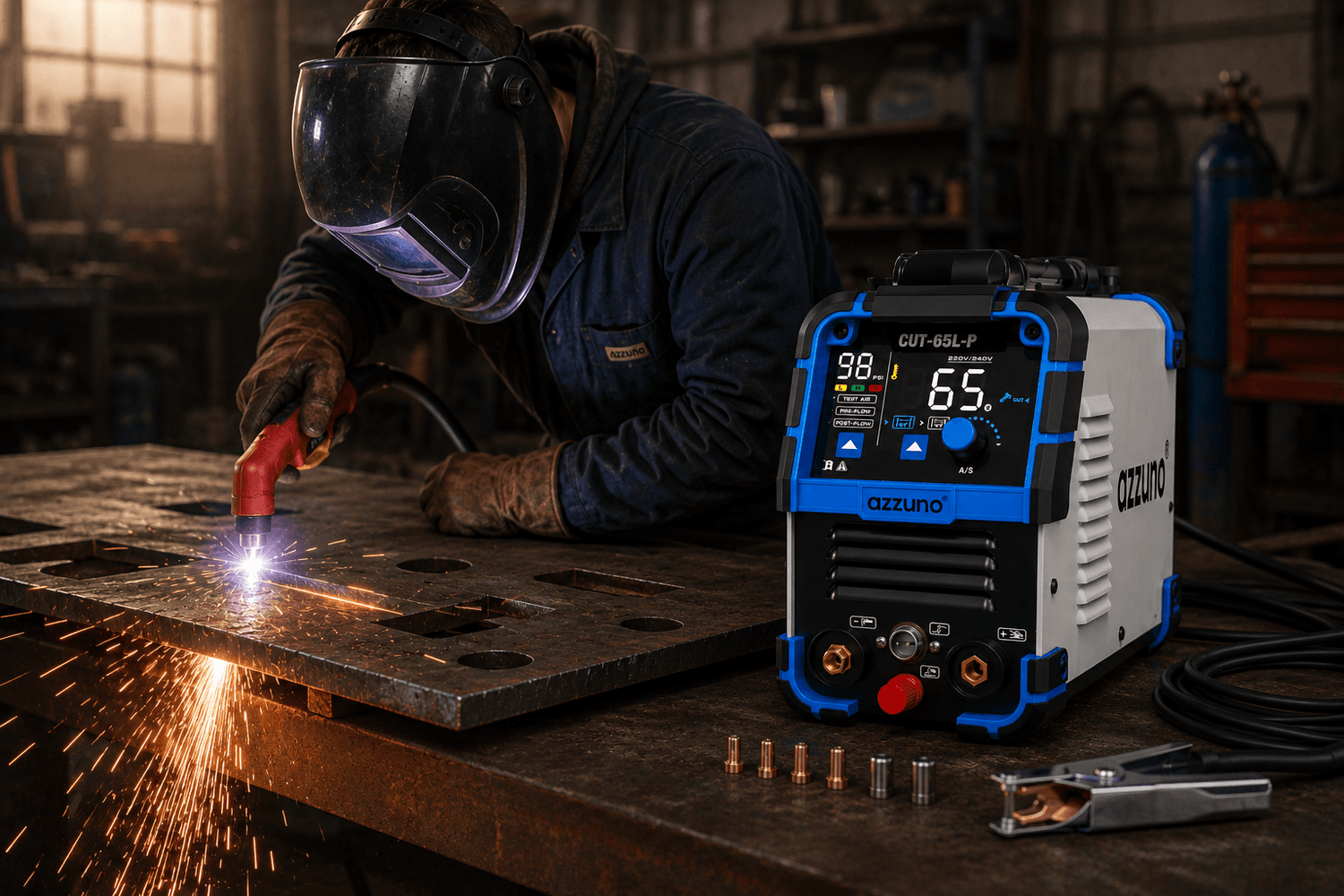
2. Azzuno CUT-65L-P — Best Value for Home & Field
Specs at a glance:
- Output: 65A (220V) / 35A (110V)
- Clean cut: up to 3/4" (20mm) mild steel
- Severance: up to 1" (25mm)
- Duty cycle: 25% at 65A
- Input voltage: 110/220V dual voltage
- Weight: 14.6 lbs
- Price: From $259.99
- Arc start: Non-HF non-touch pilot arc
- Air pressure: 6.0–7.5 PSI
- Efficiency: 85%
Here's the thing about the Azzuno CUT-65L-P: at 14.6 lbs and $259.99, it's roughly half the weight and less than half the price of the PRIMEWELD, with a higher max amperage rating. That combination makes it the most interesting machine on this list for anyone who needs to actually carry their cutter somewhere.
The 65A output at 220V puts it at the top of this group for raw cutting power. In practice, that translates to clean cuts through 3/4" steel and a 1" severance rating—enough for fence posts, gate hinges, trailer repairs, and most farm equipment patches. The non-touch pilot arc fires reliably on painted and rusted surfaces, which matters if you're cutting old farm steel that hasn't seen a wire brush in years.
The air sensor technology with LED display gives you real-time pressure feedback—no guessing whether your compressor is keeping up. This is a practical feature that prevents the #1 cause of premature consumable failure: low air pressure.
On 110V, you get 35A. That's enough for 1/4" to 3/8" clean cuts on household power, which covers most quick-repair scenarios when you don't have access to a 220V circuit.
Who it fits: Ranch Hand Ryan who needs to throw a plasma cutter in the truck for fence and equipment repairs. At 14.6 lbs with a built-in handle, it's the most field-friendly machine here. Also works for Garage Mike on a budget—you're getting 65A for $260.
Trade-off: 25% duty cycle means you'll be waiting for cool-downs during extended cutting sessions. For intermittent repairs, this rarely matters. For long production cuts, plan your pace accordingly.
3. Hobart AirForce 40i — Best Trusted Brand for Garage Use
Specs at a glance:
- Output: 40A (240V) / 27A (120V, 20A circuit) / 20A (120V, 15A circuit)
- Clean cut: 5/8" (15.9mm) mild steel
- Severance: 7/8" (22mm)
- Duty cycle: 60% at 40A (240V)
- Input voltage: 120/240V dual voltage (MVP adapters)
- Weight: 21 lbs
- Price: ~$1,300
- Arc start: Pilot arc (non-HF)
- Air requirement: 6.0 CFM at 90–120 PSI
Hobart is a name that carries weight—pun intended. The AirForce 40i has been a garage staple for years, and for good reason. The build quality is a step above the budget brands, the XT40R torch is comfortable for extended use, and the MVP (Multi-Voltage Plug) adapters let you swap between 120V and 240V outlets without tools.
The 60% duty cycle at 40A matches the PRIMEWELD CUT60, though at lower amperage. In real terms, you can run longer continuous cuts on thinner material. The Wind Tunnel Technology and Fan-On-Demand are Hobart-specific features that keep dust out of the internals and reduce power draw when you're between cuts.
Power Factor Correction (PFC) circuitry draws up to 30% less amperage for the same cutting range compared to competitors without PFC. If you're running on a long extension cord or a generator, this matters—fewer nuisance breaker trips.
Who it fits: Garage Mike who values brand reliability and a 5/3/1 warranty (5 years on transformers, 3 on PC boards, 1 on torch). If you're setting up a permanent garage station and want something that'll still be running in ten years, the 40i earns its premium.
Trade-off: At $1,300, you're paying for the name and warranty. The 40A output is the lowest max amperage in this group. You're not cutting 3/4" plate with this machine.
4. LOTOS LTP5000D — Best Budget Entry Point
Specs at a glance:
- Output: 20–50A (some sources list up to 60A peak)
- Clean cut: 1/2" (12mm) mild steel
- Severance: 3/4" (19mm)
- Duty cycle: 60% at 50A (some listings cite 60% at 60A)
- Input voltage: 110/220V dual voltage
- Weight: 19 lbs
- Price: ~$350–$400
- Arc start: Non-touch pilot arc
- Air requirement: 4.2 CFM at 65 PSI
The LOTOS LTP5000D has been one of the bestselling budget plasma cutters for years, and the formula hasn't changed much: decent cutting power, dual voltage, pilot arc, and a price that doesn't require financing. The front-mounted regulator is a nice touch for quick pressure adjustments without reaching around the back of the machine.
At 19 lbs, it's portable enough for garage-to-driveway moves. The lower air requirement (4.2 CFM at 65 PSI) means you can run it on a smaller pancake compressor—most other machines in this group need 5+ CFM, which rules out anything under a 6-gallon tank.
The non-touch pilot arc handles expanded metal and painted surfaces without re-triggering. Consumables are inexpensive and widely available.
Who it fits: Maker Sarah who's setting up a small studio and needs a capable cutter for sheet metal, art pieces, and light fabrication. The low air requirement and compact size fit tight workshop spaces. Also a solid first plasma cutter for anyone who wants to try the technology without a big investment.
Trade-off: 50A limits your cutting thickness compared to the 60–65A machines. The MOSFET inverter design is less robust than IGBT units under heavy use. LOTOS customer service has mixed reviews—some buyers report fast responses, others wait weeks for warranty claims.
5. Azzuno CUT-55L — Best Lightweight Option for Small Shops
Specs at a glance:
- Output: 55A (220V) / 35A (110V)
- Clean cut: up to 1/2" (12mm) mild steel
- Severance: up to 3/4" (20mm)
- Duty cycle: 25% at 55A
- Input voltage: 110/220V dual voltage
- Weight: ~15 lbs
- Price: From $219.99
- Arc start: Non-HF non-touch pilot arc
- Efficiency: 85%
- No-load voltage: 365V
The CUT-55L is Azzuno's lighter-duty plasma cutter, and it fills a specific niche: you want the portability and dual-voltage flexibility of the CUT-65L-P but don't need the extra 10 amps. At roughly $220, it's the most affordable machine on this list by a meaningful margin.
The 55A output handles 1/2" clean cuts and 3/4" severance on 220V. On 110V, the 35A rating matches the CUT-65L-P—so for household-circuit work, there's no practical difference between the two machines. The non-HF non-touch pilot arc gives you clean starts on rusty and painted surfaces without the consumable wear that comes from contact starting.
If you're mostly cutting sheet metal, thin plate, and stock under 1/2", the CUT-55L does the same job as its bigger sibling for $40–$100 less. The 85% efficiency rating matches the CUT-65L-P, which means reasonable power draw on standard circuits.
Who it fits: Maker Sarah running a compact studio with a 110V outlet and a small compressor. Also Garage Mike doing occasional automotive sheet metal work and bracket fabrication. If your cutting needs don't regularly exceed 1/2", save the money.
Trade-off: Same 25% duty cycle limitation as the CUT-65L-P. The 55A ceiling means you'll struggle with anything over 1/2" in a single pass.
Side-by-Side Comparison
| Feature | PRIMEWELD CUT60 | Azzuno CUT-65L-P | Hobart AirForce 40i | LOTOS LTP5000D | Azzuno CUT-55L |
|---|---|---|---|---|---|
| Max Output (220V) | 60A | 65A | 40A | 50A | 55A |
| Max Output (110V) | 30A | 35A | 27A | ~30A | 35A |
| Clean Cut | 3/4" (19mm) | 3/4" (20mm) | 5/8" (15.9mm) | 1/2" (12mm) | 1/2" (12mm) |
| Severance | 7/8" (22mm) | 1" (25mm) | 7/8" (22mm) | 3/4" (19mm) | 3/4" (20mm) |
| Duty Cycle | 60% | 25% | 60% | 60% | 25% |
| Arc Start | Blowback pilot arc | Non-HF pilot arc | Pilot arc (non-HF) | Non-touch pilot arc | Non-HF pilot arc |
| Weight | 30 lbs | 14.6 lbs | 21 lbs | 19 lbs | ~15 lbs |
| Air Required | 5 CFM @ 90 PSI | 6.0–7.5 PSI | 6.0 CFM @ 90–120 PSI | 4.2 CFM @ 65 PSI | Standard shop air |
| Dual Voltage | 110/220V | 110/220V | 120/240V | 110/220V | 110/220V |
| Price | ~$699 | From $259.99 | ~$1,300 | ~$350–400 | From $219.99 |
Which Portable Plasma Cutter Should You Buy?
If you're Ranch Hand Ryan (farm repairs, field work, fence and equipment cutting): The Azzuno CUT-65L-P is the pick. At 14.6 lbs with 65A output and a 1" severance rating, it handles the thick stock you'll encounter on agricultural equipment while being light enough to carry anywhere on the property. The non-touch pilot arc cuts through the rusted gate hardware and painted fence posts you deal with daily.
If you're Garage Mike (home shop, mixed automotive and fabrication projects): It depends on budget. If you can spend $700, the PRIMEWELD CUT60's 60% duty cycle makes long sessions more productive. If you want to spend under $300, the CUT-65L-P gives you more amperage for the money than anything else on the market.
FAQ: Portable Plasma Cutter Questions Answered
Can a portable plasma cutter run on a standard 110V household outlet?
Yes, most dual-voltage portable plasma cutters operate on 110V. However, output drops significantly—typically to 30–35A on 110V compared to 40–65A on 220V. On 110V, expect clean cuts up to about 3/8" mild steel. You also need to verify your circuit can handle the amperage draw; a dedicated 20A circuit is recommended for 110V operation.
What size air compressor do I need for a portable plasma cutter?
Most portable plasma cutters require 4–6 CFM at 65–90 PSI. A 6-gallon pancake compressor can run lighter-duty machines like the LOTOS LTP5000D (4.2 CFM requirement) but will struggle with higher-demand units. For the Hobart AirForce 40i or PRIMEWELD CUT60, you'll want at least a 20-gallon compressor rated for 5+ CFM at 90 PSI. Running an undersized compressor causes inconsistent cuts and rapid consumable wear.
What's the difference between clean cut and severance cut ratings?
Clean cut (also called "recommended cut") is the thickness at which you can move at a reasonable speed and get a clean edge with minimal dross. Severance (or "maximum cut") is the absolute thickest material the machine can push through—at very slow speed, with rough edges and significant dross. According to AWS D1.1 structural welding code standards, cut edge quality matters for structural applications. For most DIY and repair work, stay within the clean cut rating.
Is a pilot arc worth the extra cost over a contact-start plasma cutter?
Yes, especially if you work with painted, rusted, or expanded metal. A pilot arc ignites the plasma stream without touching the torch tip to the workpiece, which means no scratching the tip on every start. This extends consumable life and makes cutting perforated or mesh materials far easier—you don't have to retrigger the arc at every gap. The cost difference between pilot arc and non-pilot arc models has narrowed to the point where it's almost always worth choosing pilot arc.
How thick can a 65-amp plasma cutter cut?
A 65A plasma cutter like the Azzuno CUT-65L-P can clean cut up to 3/4" (20mm) mild steel and sever up to 1" (25mm) on 220V power. On 110V, the same machine outputs 35A, which reduces clean cut capacity to roughly 3/8" (10mm). Cutting speed decreases as thickness increases—you can push a 65A machine through 1" plate, but expect to move slowly and plan for post-cut grinding.
Can I use a portable plasma cutter on aluminum and stainless steel?
Yes. Plasma cutters work on any electrically conductive metal, including aluminum, stainless steel, copper, and brass. Cutting capacity is typically lower on aluminum and stainless compared to mild steel—expect roughly 60–70% of the mild steel rating. Compressed air works for all three materials, though some industrial applications use nitrogen or argon-hydrogen mixes for cleaner edges on stainless.
What safety gear do I need for plasma cutting?
At minimum: a welding helmet with shade #5–#8 lens (darker for higher amperage), leather gloves, a long-sleeved flame-resistant jacket, and safety glasses underneath. The arc produces intense UV radiation and sparks—do not skip eye protection. OSHA 29 CFR 1910.252 requires fire prevention measures within 35 feet of cutting operations. Keep a fire extinguisher nearby and clear flammable materials from the cutting area. The compressed air system also requires regular moisture draining to prevent water contamination of cuts.
Mike Torres is a welding specialist with over 15 years of experience in MIG, TIG, and plasma cutting applications. He has worked in fabrication shops, on agricultural equipment, and in home garage setups across the Midwest.

Leave a comment
This site is protected by hCaptcha and the hCaptcha Privacy Policy and Terms of Service apply.