



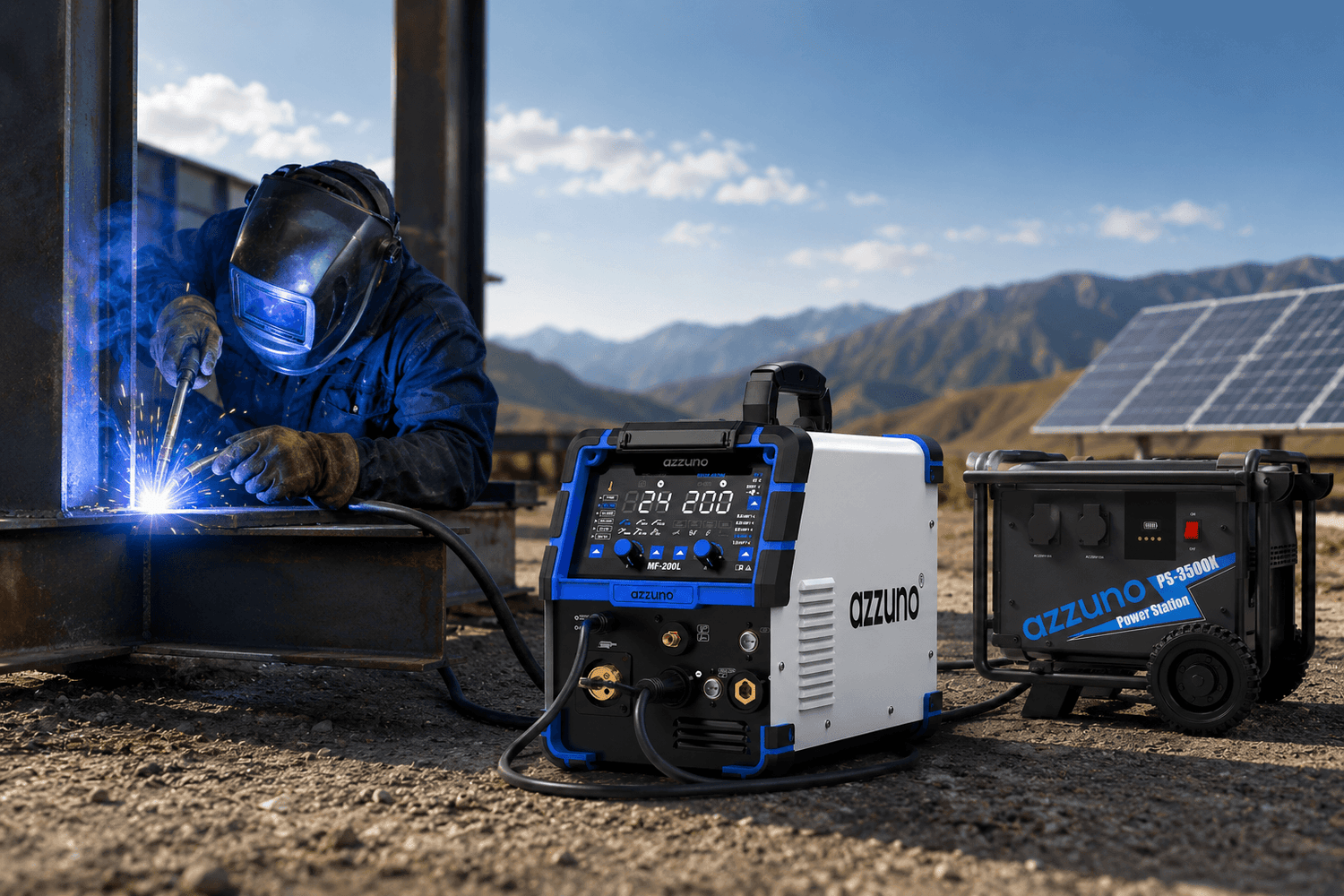
Key Takeaways:
- At 200+ field hours per year, the Azzuno PS3500X costs less over 5 years than a comparable 3,500W gas generator ($2,581 vs $2,750) — despite costing 2.8x more upfront
- Gas generators burn fuel the entire time they run; the PS3500X only draws power when you're actively welding — idle consumption is the silent budget killer
- The PS3500X produces zero emissions (safe for indoor/barn use), requires zero maintenance, and delivers pure sine wave power that protects IGBT welder electronics
- LiFePO4 battery rated for 3,500+ cycles outlasts a typical generator engine at field welding usage levels
If you weld away from grid power, you have two choices for portable power: a battery power station or a gas generator. Most welders pick the gas generator because the sticker price looks lower. But the price tag on the box is not what you pay over time.
Fuel, oil changes, spark plugs, fuel stabilizer, idle consumption, and eventually a replacement engine — those costs add up quietly. A battery power station like the Azzuno PS3500X costs more upfront but runs on electricity, not gasoline. Over five years of field welding, the gap narrows fast. Depending on how often you weld, it can flip entirely.
This article breaks down the real numbers: purchase price, fuel vs. charging costs, maintenance, lifespan, and the hidden expenses nobody talks about — like OSHA noise compliance and EPA emissions rules that affect your job site.
The Core Question: What Does "Off-Grid Welding" Actually Cost?
Welders who work on farms, at remote job sites, or from a truck bed all share the same problem: no 220V outlet nearby. You need portable power to run your welder. The two mainstream options are:
- A portable gas generator (3,500–4,000W class) paired with a dual-voltage welder like the Azzuno MF-200L
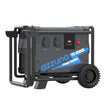
- A battery power station like the Azzuno PS3500X (3,500W rated / 7,000W peak, 2,662Wh LiFePO4) paired with the same MF-200L
Same welder. Different power source. That's the comparison.
Quick Specs: What You're Comparing
| Spec | Azzuno PS3500X | 3,500W Gas Inverter Generator |
|---|---|---|
| Rated output | 3,500W continuous | 3,500W continuous |
| Peak/surge output | 7,000W | 4,000–5,000W |
| Energy storage | 2,662Wh (LiFePO4) | None — runs on fuel |
| Fuel source | Grid electricity / solar | Gasoline |
| Noise level | 0 dB (silent) | 55–68 dB |
| Weight | ~40 lbs | 50–80 lbs |
| Indoor use | Safe — zero emissions | Never — CO risk |
| Startup | Instant button press | 10–30 sec pull/electric start |
| Maintenance | None | Oil, spark plugs, air filter, fuel stabilizer |
The PS3500X also comes in a PS3500Pro version with 5,120Wh capacity for welders who need longer runtime between charges.
TCO Breakdown: Five-Year Cost Comparison
This analysis uses a realistic field welding profile: 200 job-site hours per year (about 4 hours per week), with roughly 40% of that time spent actively welding and the rest on setup, fitting, grinding, and breaks.
Why This Ratio Matters
A gas generator burns fuel the entire time it's running — whether you're welding or not. You can't start and stop a generator every five minutes. The PS3500X only draws power when you're actually welding. During setup and breaks, it sits silent at zero drain. This difference alone changes the cost picture.
Assumptions
| Parameter | Value | Source |
|---|---|---|
| Field welding hours/year | 200 hrs | Typical part-time mobile welder |
| Active welding time (40% duty) | 80 hrs/year | Intermittent field work pattern |
| Gasoline price | $3.50/gallon | AAA national average, 2026 |
| Grid electricity rate | $0.16/kWh | U.S. EIA national average, 2026 |
| Generator fuel consumption | 0.35 gal/hr (average blend of idle + load) | Manufacturer specs, 3,500W inverter class |
| PS3500X effective draw during welding | ~1,250W average (MF-200L at 110V, ~50% duty cycle) | MF-200L: 120A max on 110V, typical field draw |
The Numbers
| Cost Category | 3,500W Gas Inverter Generator | Azzuno PS3500X (2,662Wh) |
|---|---|---|
| Purchase price | $900 | $2,499 |
| 5-year fuel/charging cost | $1,225 | $82 |
| 5-year maintenance | $400 | $0 |
| 5-year replacement reserve | $0* | $0 |
| 5-year hearing protection (OSHA) | $150† | $0 |
| 5-year fuel storage/handling | $75‡ | $0 |
| Total 5-Year TCO | $2,750 | $2,581 |
* At 1,000 total hours over 5 years, a quality inverter generator is within its typical 1,500–3,000-hour lifespan. At higher usage (400+ hrs/year), expect a replacement around year 3–4, adding $700–1,000 to total cost.
† OSHA 29 CFR 1910.95 requires hearing protection and conservation programs when 8-hour TWA exposure exceeds 85 dBA. Gas generators at 55–68 dB don't always exceed this alone, but combined with grinder and welder noise on a job site, hearing protection and compliance costs add up. Estimated at $30/year for quality ear protection and compliance supplies.
‡ Fuel stabilizer, approved containers, and safe storage for gasoline (which degrades in 6–12 months even with stabilizer). Estimated at $15/year.
What Changes the Math
The PS3500X saves more money the more you weld. Here's how the comparison shifts at different usage levels:
| Annual Field Hours | Generator 5-Yr TCO | PS3500X 5-Yr TCO | Difference |
|---|---|---|---|
| 100 hrs/yr | $1,825 | $2,540 | Generator saves $715 |
| 200 hrs/yr | $2,750 | $2,581 | PS3500X saves $169 |
| 300 hrs/yr | $3,675 | $2,622 | PS3500X saves $1,053 |
| 400 hrs/yr | $4,600 | $2,663 | PS3500X saves $1,937 |
| 500 hrs/yr | $5,525 + replacement | $2,704 | PS3500X saves $3,000+ |
At 200 hours per year, you break even. At 300 hours and above, the PS3500X pulls ahead and the gap widens fast — because every extra hour of generator use burns more gas, while the PS3500X's charging cost stays minimal.
Add Solar and the Gap Widens Further
The PS3500X supports solar charging. A 200W solar panel ($200–400 one-time cost) can recharge the station during lunch breaks or between jobs. In field scenarios, solar can offset 30–60% of your charging costs, pushing the PS3500X's 5-year energy cost down to $33–$57.
A gas generator cannot run on sunlight.
Why the Generator Keeps Burning Money Even When You're Not Welding
This is the part most people miss. A gas generator at a job site runs the whole time you're there — 4 hours on-site might mean only 1.5 hours of actual arc-on time. During the other 2.5 hours, the generator idles, burning 0.15–0.20 gallons per hour just to stay ready.
That idle fuel adds up. Over a year of 200 field hours with 80 hours of actual welding:
- Generator: Burns fuel for all 200 hours = ~70 gallons/year = $245/year
- PS3500X: Only drains during the 80 hours of active welding = ~100 kWh/year = $16/year
The generator spends $229/year just to sit there running. The PS3500X spends $0.
The Hidden Costs Nobody Puts on the Spec Sheet
Noise: OSHA Compliance Isn't Optional
OSHA standard 29 CFR 1910.95 sets the permissible exposure limit for noise at 90 dBA for an 8-hour time-weighted average. The action level that triggers a mandatory hearing conservation program is 85 dBA (per OSHA 29 CFR 1910.95).
A gas generator alone might sit at 55–68 dB. But on a real job site, you're also running a grinder (95–110 dB) and welding (the arc itself produces noise). Combined exposure from generator + tools easily pushes past the 85 dBA action level. At that point, OSHA requires:
- Hearing protection provided to workers
- Annual audiometric testing at no cost to employees
- A formal hearing conservation program
- Employee notification and training
For independent welders and small crews, this means buying quality ear protection, maintaining documentation, and in some cases, paying for audiometric testing. The PS3500X produces 0 dB during operation — it removes the generator's contribution entirely.
Emissions: EPA Standards and Indoor Restrictions
The EPA's Phase 3 emission standards for nonroad spark-ignition engines (which cover portable generators) have tightened requirements for hydrocarbons, nitrogen oxides, and carbon monoxide. A typical portable gas generator produces 1.5–2.5 lbs of CO₂ per kWh of electricity generated, plus carbon monoxide, NOx, and unburned hydrocarbons.
This matters for two reasons:
-
Indoor use is never an option with a gas generator. Carbon monoxide kills approximately 70 Americans per year from generator-related poisoning (CDC data). Running a generator inside a barn, workshop, or enclosed space is not just a bad idea — it's lethal. The PS3500X produces zero emissions and is safe for indoor use.
-
Some job sites have emissions restrictions. Indoor commercial spaces, finished buildings, and environmentally sensitive areas may prohibit combustion engines. The PS3500X works anywhere — no exhaust, no permits, no arguments.
Fuel Degradation and Availability
Gasoline expires. Even with fuel stabilizer, most gasoline degrades within 6–12 months. If you weld infrequently, you're either rotating fuel stock or dealing with stale gas that fouls carburetors. During widespread power outages (exactly when you might need your generator most), gas stations can't pump fuel without electricity.
The PS3500X holds its charge for months. When it needs a top-off, plug it into any wall outlet. Add a solar panel and you're not dependent on anything.
Real-World Scenarios: Three Welders, Five Years
The Farm Welder (200 hrs/year)
Tom runs a 500-acre cattle operation. Equipment breaks at the worst times, and the nearest welding shop is 40 minutes away. He keeps a portable setup in his truck.
| Cost Over 5 Years | Gas Generator + MF-200L | PS3500X + MF-200L |
|---|---|---|
| Power source | $900 | $2,499 |
| Fuel / charging | $1,225 | $82 |
| Maintenance | $400 | $0 |
| Other costs | $225 | $0 |
| Total | $2,750 | $2,581 |
At 200 hours/year, the PS3500X costs $169 less over five years. Tom also gets zero noise near livestock, no exhaust in the barn, and instant startup when a fence breaks at 6 AM.
The Mobile Fabricator (350 hrs/year)
Sarah does custom metalwork — gates, railings, trailer repairs. She drives to client sites 3–4 days a week.
| Cost Over 5 Years | Gas Generator + MF-200L | PS3500X + MF-200L |
|---|---|---|
| Power source | $900 | $2,499 |
| Fuel / charging | $2,144 | $143 |
| Maintenance | $400 | $0 |
| Replacement (year 4) | $900 | $0 |
| Other costs | $300 | $0 |
| Total | $4,644 | $2,642 |
At 350 hours/year, the generator needs replacement around year 4. The PS3500X saves Sarah $2,002 over five years. She also welds inside clients' garages without CO concerns — a real selling point for her customers.
The Emergency Repair Welder (100 hrs/year)
Jake does occasional field repairs — maybe 2 hours a week during busy months, less in winter.
| Cost Over 5 Years | Gas Generator + MF-200L | PS3500X + MF-200L |
|---|---|---|
| Power source | $900 | $2,499 |
| Fuel / charging | $613 | $41 |
| Maintenance | $200 | $0 |
| Other costs | $75 | $0 |
| Total | $1,788 | $2,540 |
At 100 hours/year, the generator is still cheaper over 5 years by $752. Jake's low usage doesn't rack up enough fuel cost to offset the PS3500X's higher purchase price. For him, the generator makes financial sense — unless he values indoor welding, silent operation, or zero maintenance, which might tip the scale.
What the PS3500X Cannot Do (Being Honest)
No product fits every situation. Here's where the gas generator still wins:
- Full-day 220V welding at 200A. The PS3500X can't deliver the 6,000–7,000W needed for 220V full-output MIG. If your regular work involves welding 3/8" plate all day on 220V, you need a generator or grid power.
- Unlimited runtime. A gas generator runs as long as you feed it fuel. The PS3500X runs for 30–90 minutes of continuous welding per charge (depending on output level), then needs to recharge. Solar extends this, but you're still limited by battery capacity.
- Very thick structural work. 110V MIG tops out around 3–6mm depending on joint geometry. For structural welds on 10mm+ plate, 220V is mandatory.
For everything else — field repairs, farm work, mobile fabrication, remote installations, indoor jobs — the PS3500X covers the vast majority of what working welders actually do.
PS3500X + MF-200L: The Combined System
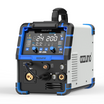
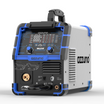
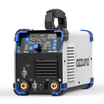
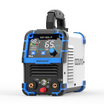
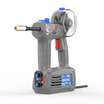
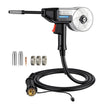
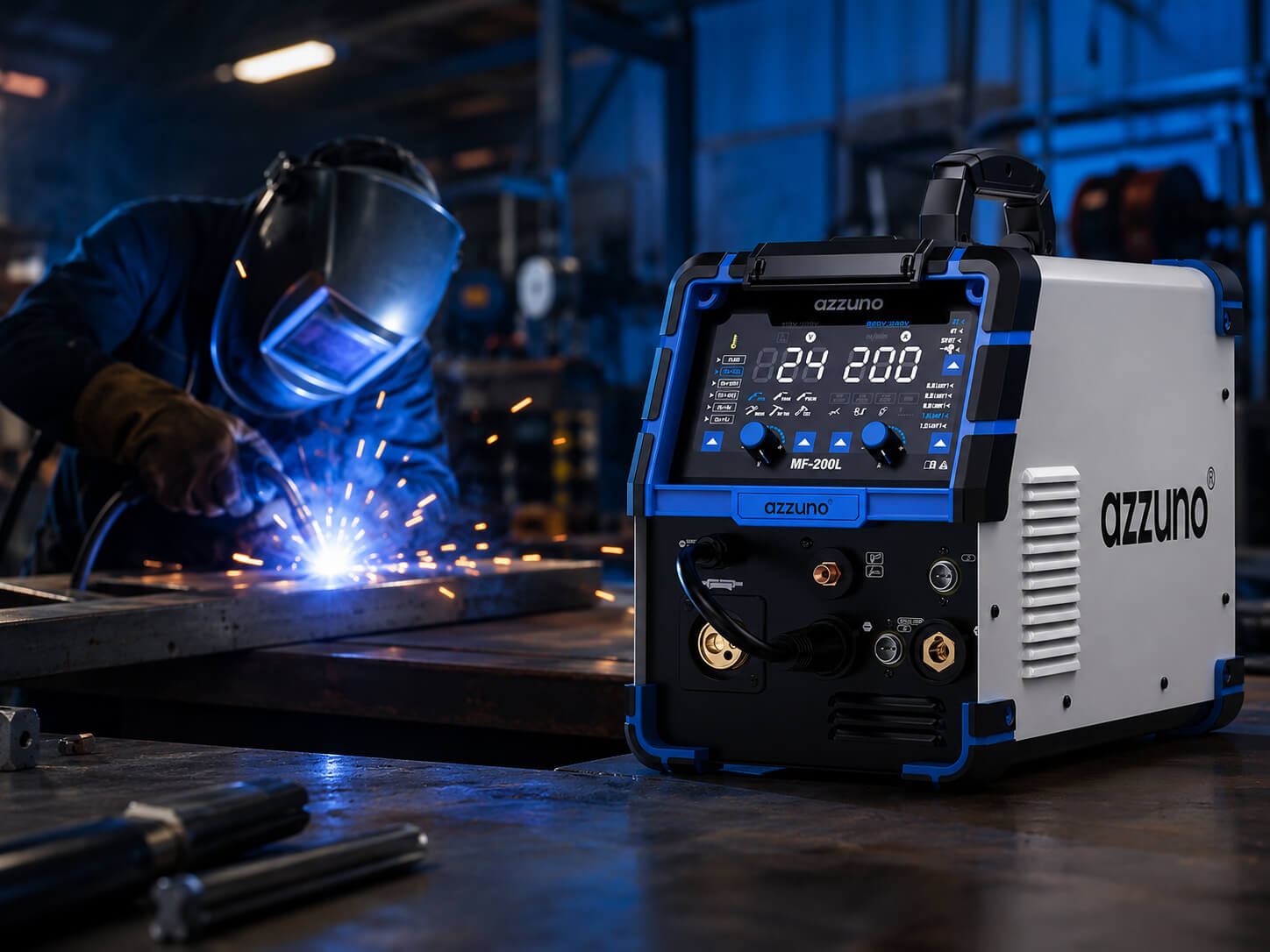
The Azzuno MF-200L is a 9-in-1 multi-process welder (MIG / TIG / Stick / Plasma / Aluminum MIG) with dual voltage (110V/220V). On the PS3500X, it runs in 110V mode:
- 110V MIG: Up to 120A at 15% duty cycle — handles sheet metal through 1/8" plate
- 110V Stick: Up to 120A — runs 2.5mm and 3.2mm electrodes
- 110V TIG: Up to 120A — covers most light fabrication
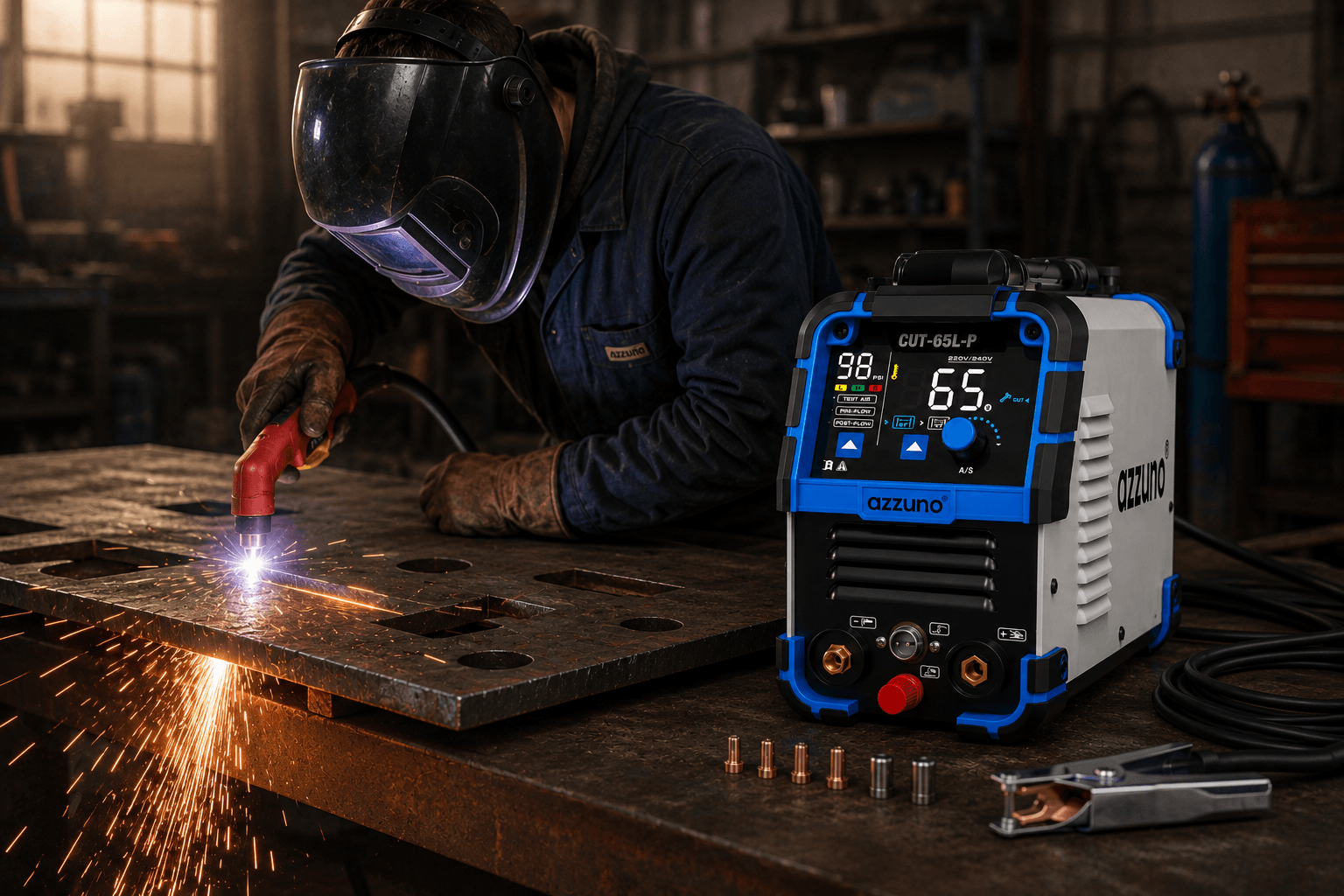
- 110V Plasma: Cuts thinner material, good for fitting prep
The MF-200L's Synergic MIG mode and IGBT inverter technology produce a stable arc on the PS3500X's pure sine wave output — no dirty power surges that can damage sensitive electronics. Gas generators, especially open-frame models, can produce distorted waveforms that cause arc instability and, over time, damage IGBT components.
The Maintenance Comparison: 5 Years of Upkeep
| Task | Gas Generator | PS3500X |
|---|---|---|
| Oil change | Every 50–100 hours ($15–25 each) | None |
| Spark plug replacement | Every 200 hours ($8–15) | None |
| Air filter cleaning/replacement | Every 100–200 hours ($10–20) | None |
| Fuel stabilizer | Every storage period ($10–15/bottle) | None |
| Carburetor cleaning | As needed ($50–150 or DIY time) | None |
| Battery check (electric start models) | Annual | None |
| Total estimated 5-year maintenance | $400–600 | $0 |
Generators have moving parts. Moving parts wear out. The PS3500X has no engine, no fuel system, no spark plugs, no air filter. LiFePO4 batteries rated for 3,000+ cycles at 80% depth of discharge last well beyond the 5-year window at typical welding usage.
FAQ: PS3500X vs Gas Generator for Welding
Q: Can the PS3500X really run a MIG welder?
Yes. The Azzuno MF-200L draws approximately 2,000–2,500W in 110V MIG mode at moderate output. The PS3500X delivers 3,500W continuous and 7,000W peak — enough headroom to handle the inrush current when the wire feeder starts. We've tested this combination in the field. It works.
Q: How long can I weld on one PS3500X charge?
It depends on your output level and duty cycle. At moderate 110V MIG output (~120A) with a typical weld-check-adjust field pattern, expect 45–90 minutes of arc-on time per full charge. The PS3500Pro (5,120Wh) roughly doubles that. Real-world intermittent work (the kind most field welders do) extends effective working time to cover a full day of repairs.
Q: What happens if I run out of battery on a job?
You recharge. Options include: a wall outlet (if you have access), a 12V car charger during the drive to your next job, or a solar panel set up during your lunch break. A 200W solar panel can add meaningful charge during a 1-hour break. If you're in a remote area with no power access and no solar, you're stuck — this is the one scenario where a generator's unlimited runtime wins.
Q: Is a generator's "dirty power" bad for my welder?
It can be. Open-frame generators produce modified sine wave or distorted output that can cause arc instability and, over time, damage the IGBT components in modern inverter welders. Inverter generators produce cleaner power but cost more. The PS3500X outputs pure sine wave — identical in quality to grid power. No risk to your welder's electronics.
Q: What about the PS3500Pro with 5,120Wh — is it worth the upgrade?
If you regularly spend more than 2 hours actively welding per job site visit, the PS3500Pro's extra capacity means fewer recharges and less downtime. The 5,120Wh battery gives you roughly 1.5–2 hours of continuous MIG welding at moderate output, or a full day of intermittent field work. For professional mobile welders, the Pro version pays for itself in convenience.
Q: Can I use the PS3500X for things other than welding?
Absolutely. The PS3500X has multiple AC outlets, USB ports, and DC outputs. On a job site, you can run your welder, charge your phone, power a work light, and run a small angle grinder — all at the same time. At home, it works as emergency backup power for your refrigerator, lights, and devices during outages. A gas generator can do this too, but with noise, fuel cost, and the inability to use it indoors.
Q: Does the PS3500X work in cold weather?
LiFePO4 batteries perform well down to about 14°F (-10°C) for discharge. Charging in sub-freezing temperatures requires a power station with a built-in heating system — check the specific model specs. Gas generators can be harder to start in cold weather, especially pull-start models. Both have cold-weather limitations, but they show up differently.
The Bottom Line
For welders who work off-grid more than 200 hours per year, the Azzuno PS3500X costs less to own over five years than a comparable gas generator. The savings come from three places: zero fuel cost (electricity is 6–10x cheaper per kWh than gasoline-generated power), zero maintenance, and zero idle consumption.
For welders under 100 hours per year, the generator's lower purchase price keeps it ahead financially. But even then, the PS3500X offers advantages that don't show up in a spreadsheet: silent operation, indoor safety, instant startup, and no fuel to store or degrade.
The shift from gas to battery power for welding is the same shift happening across construction and trades — quieter, cleaner, and cheaper to operate once you get past the sticker price. The Azzuno PS3500X + MF-200L combination is built for exactly this use case.
Shop the system:

Leave a comment
This site is protected by hCaptcha and the hCaptcha Privacy Policy and Terms of Service apply.