


Walk into any welding forum or browse online for your next machine, and the same debate shows up everywhere: Do I actually need a multi-process welder, or am I just buying features I'll never touch?
Machines that pack MIG, TIG, Stick, and even plasma cutting into a single chassis have taken over the DIY and home-garage market in the last few years. They're hard to ignore. But the price tag is higher, the settings take longer to learn, and plenty of people buy one only to realize a basic MIG machine would have covered everything they do.
So here's an honest breakdown — who should pull the trigger, who shouldn't, and where the line actually falls.
What a Multi-Process Welder Actually Is
The name says what it does, but the range varies wildly between models. Some machines give you two processes. Others hand you nine and expect you to grow into them.
Depending on the unit, you might get:
- Gas MIG — the go-to for clean, spatter-free welds in the shop
- Flux Core MIG — gasless, outdoor-friendly, handles less-than-perfect metal
- Pulse MIG — tighter arc control, less spatter, better on thin material and aluminum
- HF TIG — high-frequency start for stainless and precision work
- Stick — the old standby for thick steel and bad conditions
- Plasma Cutting — cuts steel, aluminum, copper without switching tools
- Spot Welding — for sheet metal and auto body
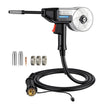
- Spool Gun compatibility — the practical way to MIG aluminum without bird-nesting
The promise is straightforward: instead of lining your garage wall with four separate machines and a tangle of leads, you wheel one unit into place and get to work. Whether that promise pays off depends entirely on the work.
When a Basic MIG Welder Is All You Need
There's nothing wrong with a single-process MIG machine. For a lot of people, it's the right tool and it'll stay the right tool.
You probably don't need a multi-process welder if your welding life looks like this:
- Fixing a fence gate or a cracked mower deck a few times a year
- Running occasional beads on mild steel in the garage
- Building a fire pit, a smoker, or a set of brackets once in a while
- Wanting to spend as little as possible upfront and learn as you go
A straightforward MIG welder — especially one with synergic control that handles voltage and wire speed for you — covers this kind of work without asking you to navigate a menu of settings you won't use. The bead won't win welding competitions, but the gate stays shut and the mower runs. That's the job.
Who Actually Benefits from a Multi-Process Welder
The case for a multi-process machine gets stronger the moment your projects stop looking the same from one weekend to the next.
You work on cars and trucks.
Automotive welding isn't one kind of welding. One afternoon you're MIG-welding a bracket onto a frame. A month later you're TIG-welding a stainless exhaust section. Somewhere in between, you're plasma-cutting a rusted panel out and Stick-welding a trailer hitch in the driveway because the garage door won't clear the truck. Running between three machines for three different jobs gets old fast. Running one machine that switches between all three — that's when the multi-process argument starts making sense in your own garage, not just on a spec sheet.
You build things for fun, and the projects keep evolving.
Weekend fabrication has a way of drifting well past the original plan. What started as a simple welding table turns into a custom roof rack. Then a utility trailer. Then a smoker with a baffle plate and expanded metal grates. Each project asks for something slightly different from your machine. A multi-process welder doesn't lock you into the project you planned — it stays useful as the project mutates into something else.
Your garage has no room for a welding museum.
Most home shops are tight. Even a generous two-car garage fills up fast when you start bolting down a dedicated MIG machine, a separate TIG setup, a plasma cutter on its own cart, and a Stick welder gathering dust in the corner. One unit on one cart with one set of leads going to one outlet changes how the space feels and how fast you can set up and tear down between jobs.
You already know you're going to want more later.
Some welders buy a basic machine knowing they'll outgrow it. If you can already see yourself getting curious about TIG, wanting to try aluminum, or eyeing a plasma cutter for sheet metal work, buying the machine that covers those things now costs less than buying a starter unit and upgrading in eighteen months. The upgrade path is real and expensive — plenty of people have a perfectly functional 135-amp MIG in the corner that they barely touch because the 9-in-1 next to it does everything.
What To Look For, Based on Where You're At
Not every multi-process machine is built for the same user. The difference between a capable 5-in-1 and a loaded 9-in-1 isn't just the number of functions — it's the kind of work each one is designed to carry.
For the serious home-garage user: MF-160PRO
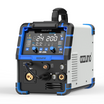
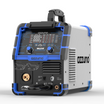
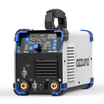
There's a sweet spot between "basic MIG" and "everything including the kitchen sink." The MF-160PRO lands there. It gives you gas MIG and flux core MIG, HF TIG, Stick, and 40-amp plasma cutting in a single chassis. Dual-voltage means it plugs in at home or at the shop. Synergic MIG control handles voltage and wire speed automatically, so you spend less time dialing in settings and more time under the hood.
This is the machine for someone who works on vehicles and trailers, builds DIY projects on a regular cadence, wants plasma cutting without a separate unit, and needs one setup that covers everything a home garage realistically throws at it. It's not a beginner machine pretending to be professional — it's the machine that makes sense when welding has become a real part of your weekends.

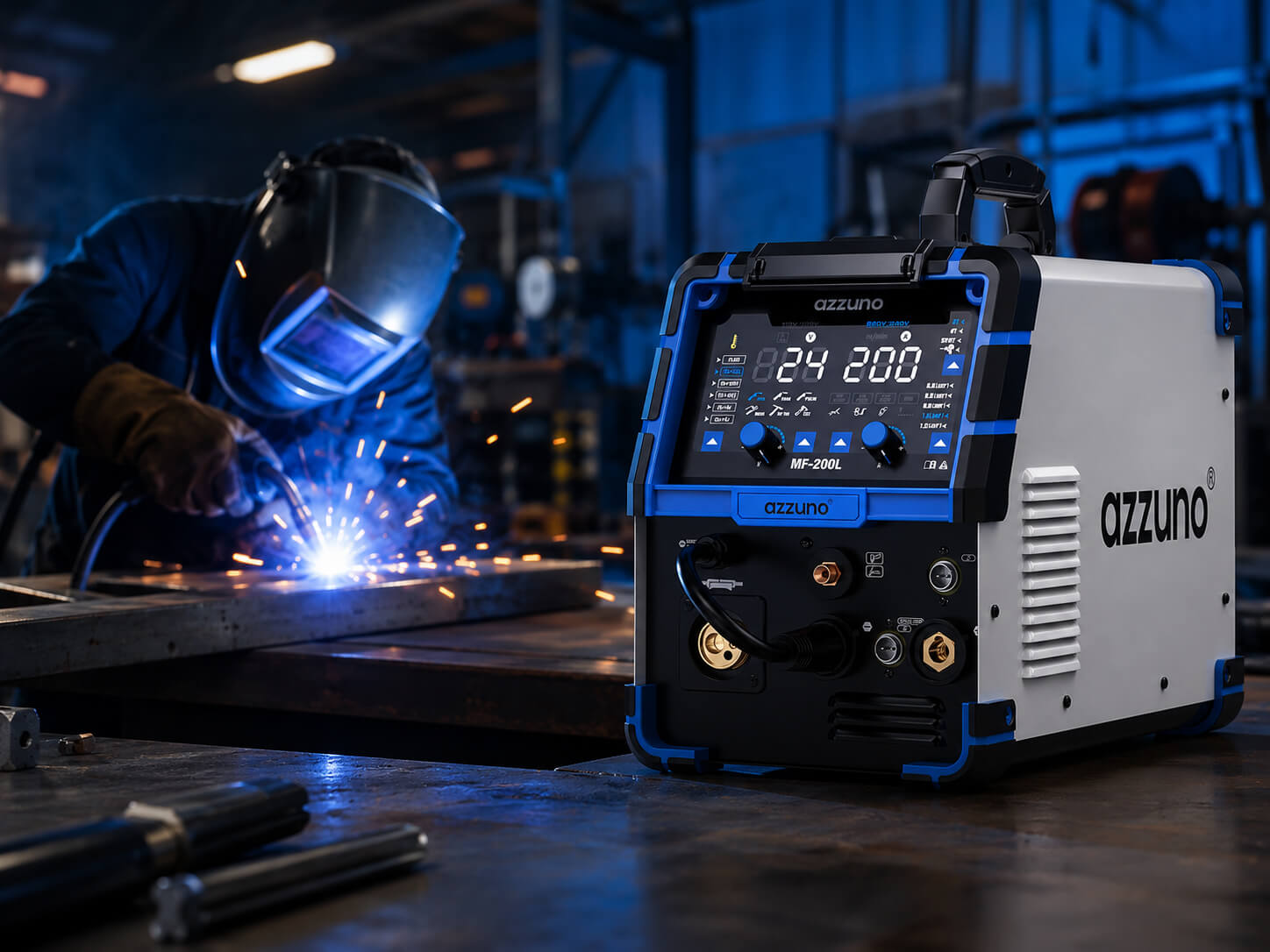
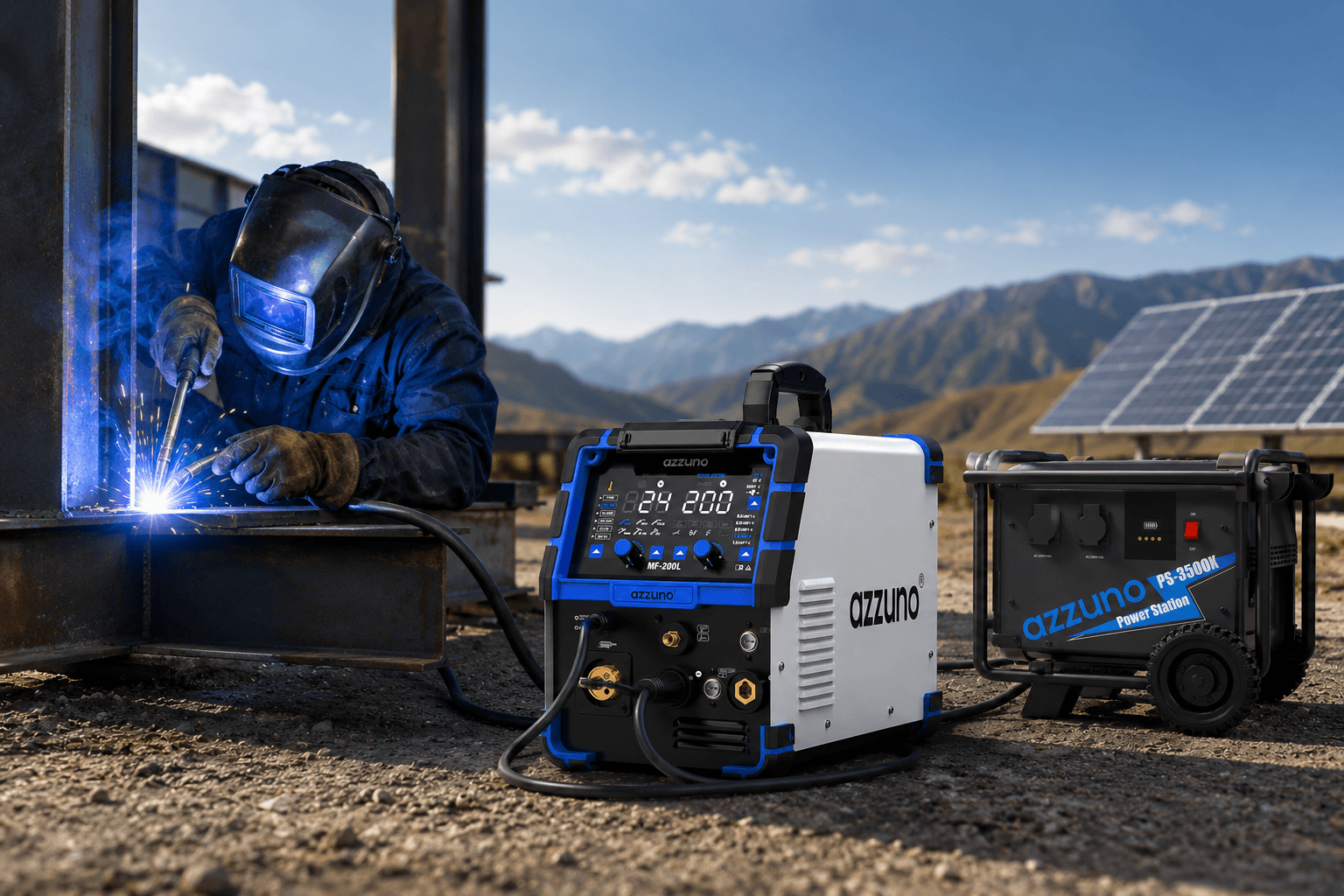
For the welder who refuses to stay in one lane: MF-200L
Some people's welding life doesn't stay within tidy boundaries. One month it's stainless TIG on a buddy's exhaust. The next it's aluminum spool-gun work on a boat trailer. Then a run of plasma-cut brackets. Then back to flux core on a farm gate, outdoors, in the wind.
The MF-200L exists for that person. Nine functions: gas and flux core MIG, pulse MIG, MAG, spot MIG, HF TIG, Stick, plasma cutting, and spool gun compatibility. Triple aluminum welding modes — standard MIG, pulse MIG for cleaner beads with less spatter, and spool gun for longer, more complex aluminum work. It's not the machine you buy when you're figuring out whether you like welding. It's the one you buy when you already know, and you're tired of wishing your machine could do more.

Are Multi-Process Welders Harder to Use?
They don't have to be.
Modern inverter-based machines have come a long way from the intimidating multi-dial panels of a decade ago. Synergic control — where the machine recommends voltage and wire speed based on what you tell it you're doing — flattens the learning curve considerably. A beginner can start on MIG, get comfortable, and slowly explore TIG or Stick when curiosity and confidence line up.
You don't need to master nine processes before you turn the machine on. You just need to master the one you're using today. The others wait.
The Honest Downsides
A multi-process welder isn't the right answer for everyone, and pretending otherwise doesn't help anybody.
They cost more upfront. A capable 5-in-1 or 9-in-1 runs higher than a single-process MIG, and that gap is real money for someone whose welding schedule is three projects a year.
They have more settings. That's not a flaw — it's the price of flexibility. But it does mean more time spent understanding what the machine can do, and more chances to be in the wrong mode if you're not paying attention.
And some of those features will sit unused. If you never touch TIG, never cut plasma, and never weld aluminum, then a multi-process machine is overkill — and you'll have paid for capabilities that gather dust.
For the person who welds mild steel occasionally and wants the simplest possible setup, a single-process MIG is still the smarter buy. There's no shame in that.
The Real Question
So do you need a multi-process welder?
For occasional repairs, probably not. For a weekend welder who sticks to mild steel and values simplicity over flexibility, the answer tilts the same way.
But if your garage sees a different project every few weeks — automotive work, fabrication, aluminum, thin stainless, plasma-cut parts — then a multi-process machine isn't about having more features. It's about not telling yourself "I can't do that job" because your machine said no.
The real question isn't whether you'll use every function the day you unbox it.
It's whether, six months from now, you'd rather ask yourself "Can my machine handle this?"
Or just walk into the garage, flip the switch, and start welding.

Leave a comment
This site is protected by hCaptcha and the hCaptcha Privacy Policy and Terms of Service apply.