



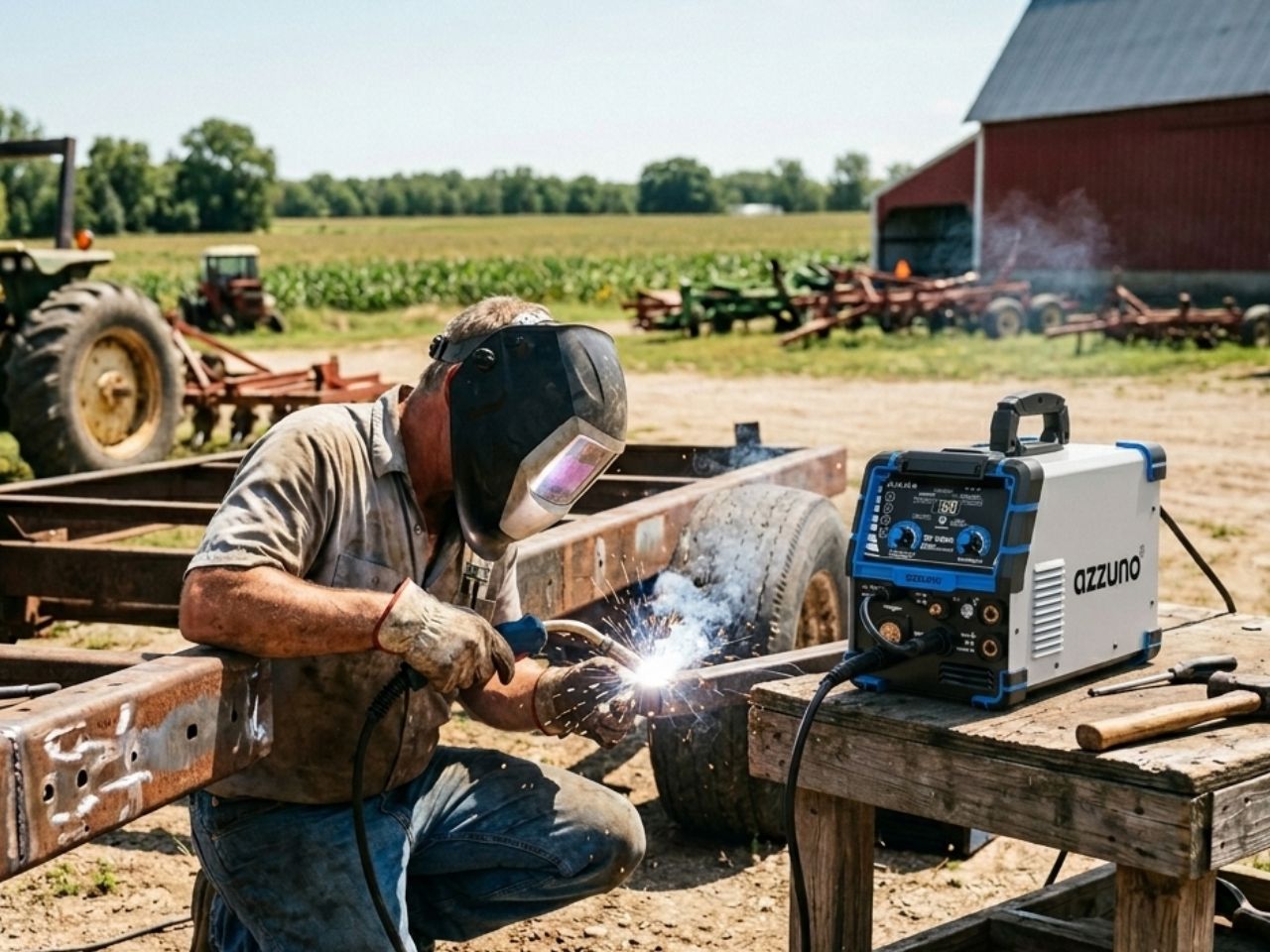
When Farm Equipment Breaks, You Don’t Wait — You Repair It
Summer is the most demanding season for farm equipment repair and maintenance.
Under extreme heat, heavy workloads, and constant vibration, agricultural machinery is pushed far beyond normal limits. Tractors run for hours, trailers carry heavy loads across uneven ground, and gates are opened and closed repeatedly throughout the day.
Over time, this creates stress on steel structures that eventually leads to cracks, broken welds, and structural fatigue.
A failed trailer frame or broken loader arm doesn’t just slow work down—it can stop operations completely during critical harvest periods.
That’s why more farmers and small workshop owners are turning to on-site farm welding repair instead of relying on external service support.
Why Summer Causes More Farm Equipment Failures
High temperatures don’t just affect comfort—they directly impact metal performance and structural integrity.
In summer farming conditions, equipment experiences:
- Continuous vibration from long working hours in the field
- Thermal expansion and contraction from day-night temperature changes
- Heavy load stress from harvesting and transportation
- Dirt, moisture, and corrosion weakening welded joints over time
These conditions concentrate stress on key structural points such as:
trailer axle mounts, gate hinges, loader arms, and hitch brackets
Once a weak point forms, it usually turns into a visible crack under load.
Trailer Frame Crack Repair (Most Common Farm Welding Job)
One of the most frequent farm welding repair tasks is trailer frame cracking, especially around axle support areas.
These cracks are dangerous because they tend to spread quickly under repeated load.
Step 1: Stop crack propagation
Before welding, drill a small hole (around 1/8”) at both ends of the crack.
This prevents the crack from continuing to spread under stress.
Step 2: Prepare a proper weld joint
Grind the crack into a V-shaped groove (around 60°) to allow deeper penetration.
Remove all rust, paint, and contamination around the repair area.
Clean metal is critical for structural welding strength.
Step 3: Reinforce the structure
After welding, apply a steel reinforcement plate (fishplate) over the repaired area.
Avoid square patches—diamond or elongated plates distribute stress more evenly along the frame.
👉 This type of repair requires a stable MIG welding machine capable of deep penetration and consistent output.
🚪 Gate & Fence Welding Repair (Farm Gate Hinge Fix)
Farm gates are under constant mechanical stress due to daily opening, closing, and livestock impact.
The most common failure points are hinge welds and support posts.
Repair process:
First, realign the gate structure using clamps or temporary supports to ensure proper alignment before welding.
Then weld a triangular gusset plate under the hinge area. This helps transfer load stress from a single weld point into a larger structural area.
This simple reinforcement significantly increases the lifespan of gate repairs.
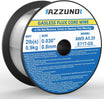
👉 For this type of job, a portable MIG welding machine with gasless flux-cored capability is especially useful for outdoor repairs.
Tractor Bucket & Loader Arm Repair (Heavy Structural Welding)
Loader arms and buckets are exposed to high-impact forces from soil, rocks, and lifting operations.
These are considered heavy-duty structural welding repairs.
Proper repair method:
Start by thoroughly cleaning the area down to bare metal. Contamination from oil, fertilizer, and rust is common on farm machinery and must be removed.
For steel thicker than 1/2 inch, preheating the joint to around 200°F–300°F helps reduce cracking risk.
Welding should always be done using multiple passes:
- Root pass for penetration
- Fill passes for strength
- Final cap pass for reinforcement
Avoid attempting a single heavy bead—it often leads to weak bonding or cracking under stress.
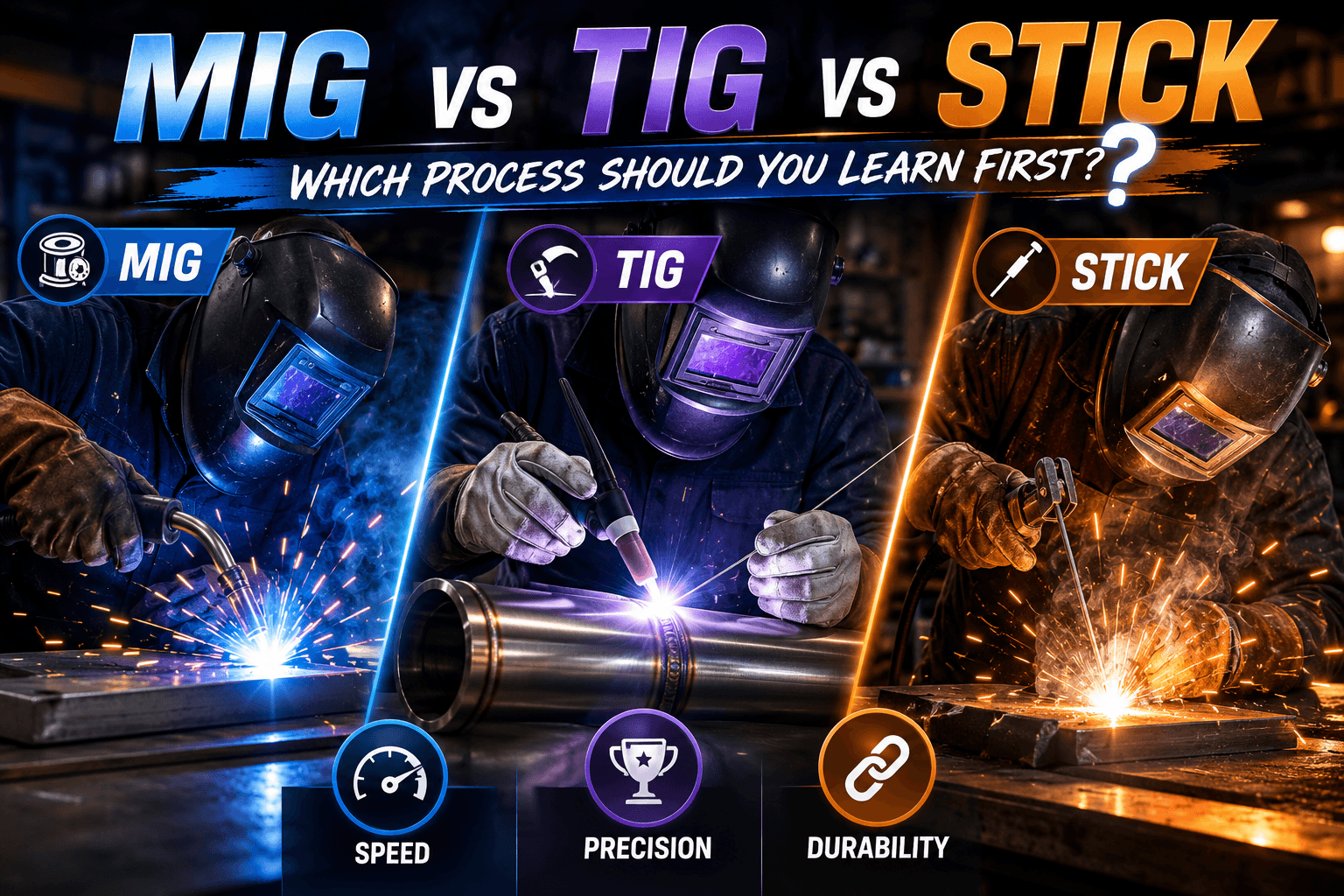
Best Welding Methods for Farm Repair Work
Different farm conditions require different welding approaches.
| Welding Process | Pros | Cons | Best Farm Use Case |
| Flux-Cored MIG (Gasless) | No gas cylinders needed; handles wind easily; burns through light rust/dirt. | Produces splatter; requires slag chipping. | The Field Workhorse. Fixing implements out in the pasture or back 40. |
| Stick (SMAW) | Maximum penetration on thick steel; ultra-forgiving on dirty metal; cheap electrodes. | Harder on thin sheet metal; slower setup; leaves heavy slag. | Heavy Structural. Repairing loader buckets, thick chassis, and structural posts. |
| Solid-Wire MIG (Gas-Shielded) | Ultra-clean welds; no slag; fastest process for thin to medium metal. | Wind blows shielding gas away, causing porous, weak welds. | In-Shop Repairs. Repairing mower decks, building brackets, or working on thin sheet metal. |
Recommended Farm Welding Setup
A reliable farm welding setup does not need to be overly complex.
Most users rely on a multi-process welding machine that combines MIG, Stick, and flux-cored functionality.
A practical farm setup should include:
- MIG welding for general repairs
- Stick welding for heavy structural jobs
- Flux-cored mode for outdoor field conditions
- Dual voltage (110V/220V) for flexible power access
This allows a single machine to handle almost all farm equipment repair welding scenarios.
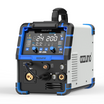
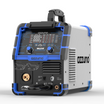
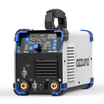
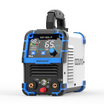
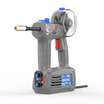
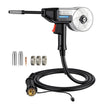
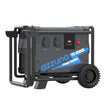
👉 A multi-process MIG welding system like the Azzuno welding series is designed for exactly this type of usage—covering farm repair, outdoor maintenance, and structural steel work.
What You Can Fix With a Basic Farm Welding Setup
With the right MIG-based welding machine, you can handle:
- cracked trailer frames
- broken gate hinges
- tractor bucket reinforcement
- barn steel structure repair
- custom farm fabrication projects
Most of these repairs can be completed on-site without sending equipment off-farm.
Common Mistakes in Farm Welding Repairs
Even experienced users often make mistakes that lead to repair failure:
- Welding over rust, paint, or fertilizer residue
- Using insufficient heat for thick structural steel
- Running continuous beads on thin metal (causing warping)
- Skipping reinforcement plates after structural repair
- Ignoring stress distribution around weld joints
A successful farm weld is not about appearance—it’s about long-term load durability.
Final Thoughts
Farm welding is not just maintenance—it is operational survival during peak season.
When equipment fails, downtime directly affects productivity, especially during harvest periods.
With the right MIG or multi-process welding machine, most common farm repairs can be completed quickly and effectively in the field.
Instead of waiting for service delays, farmers can restore equipment strength and get back to work in a matter of hours.

Leave a comment
This site is protected by hCaptcha and the hCaptcha Privacy Policy and Terms of Service apply.