


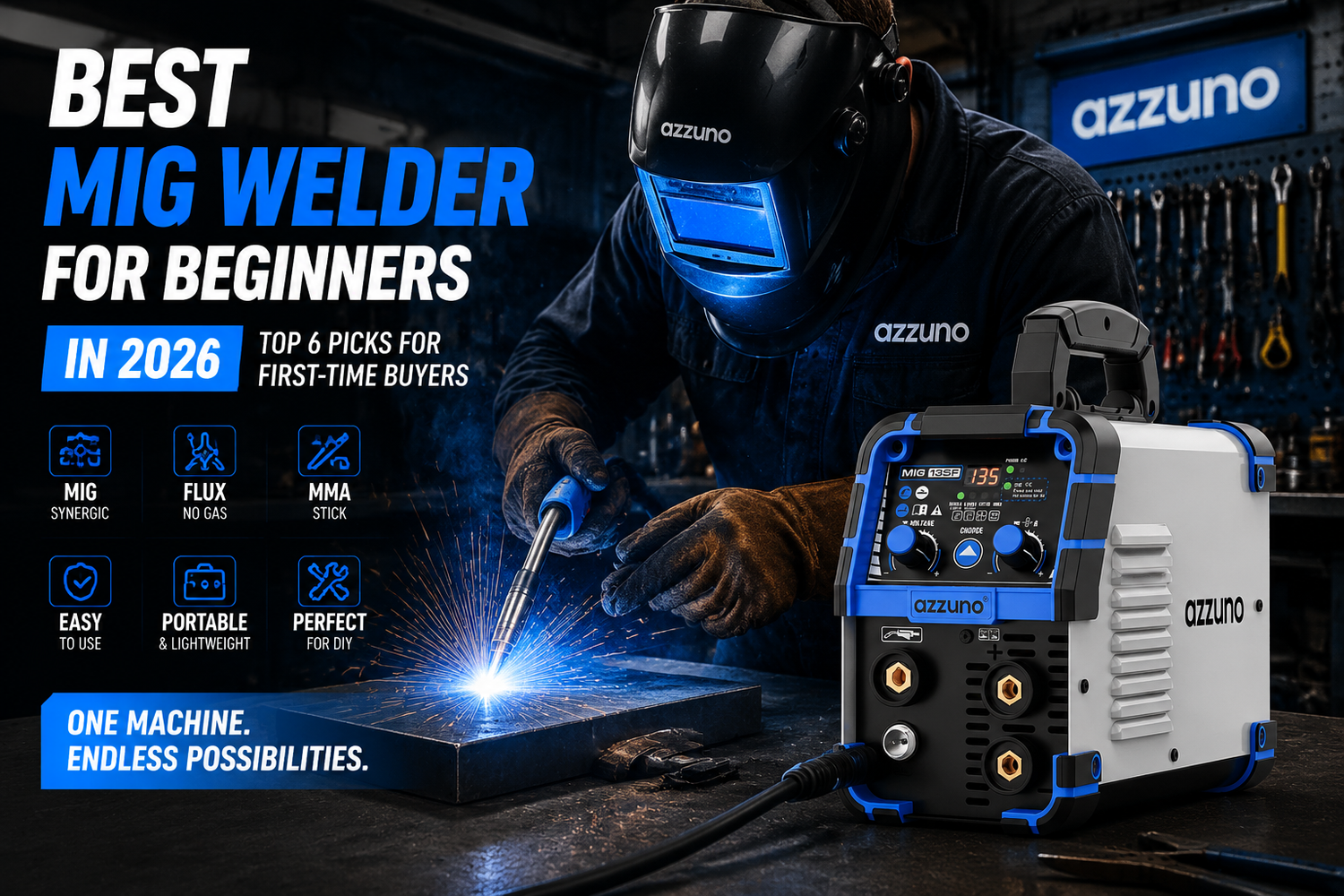
Choosing your first MIG welder is overwhelming. Every product page claims to be "beginner-friendly," but without hands-on experience, it's hard to separate marketing from reality.
This guide cuts through the noise. I spent time researching specs, reading real user feedback, and comparing what actually matters for someone starting out. The result is a shortlist of welders that won't leave you frustrated or broke.
Why MIG Is the Best Starting Point for New Welders
MIG (Metal Inert Gas) welding wins for beginners for one reason: it's forgiving.
TIG welding requires precise foot control, steady hands, and years of practice. Stick welding demands proper arc length management and electrode angles. MIG hides a lot of amateur mistakes behind its forgiving arc and continuous wire feed.
When you're learning, you want a machine that lets you focus on fundamentals—body position, travel speed, gun angle—without fighting the equipment. MIG gives you that.
Another advantage: MIG produces clean, spatter-friendly welds with minimal cleanup. That instant visual feedback helps you understand whether your technique is working. You don't get that with stick welding, where a bad bead can look terrible even with decent technique.
What Actually Matters in a Beginner Welder
Skip the power specs for a moment. Here's what matters:
Input voltage compatibility. If your garage only has 110V outlets, you're locked into 110V-only machines unless you wire a 220V circuit. Most beginners start with 110V machines because they're plug-and-play. This limits your output—typically 120A max on 110V—but it's enough for most home garage projects up to 1/4-inch steel.
Wire feed system. Budget machines often have cheap feed mechanisms that jam constantly. Look for adjustable wire speed control. Synergic (auto-setting) modes help beginners by suggesting settings based on wire type and thickness.
Duty cycle. This tells you how long you can weld before the machine overheats. A 25% duty cycle at max output means 2.5 minutes of welding followed by 7.5 minutes of cooling. For learning, this is fine. For production work, you'll want higher duty cycles.
What's NOT critical for beginners. Maximum amperage past 140A, aluminum welding capability, fancy digital displays, and pro-grade build quality. You don't need any of these to learn. They're nice-to-haves that raise the price.
Top 6 MIG Welders for Beginners in 2026
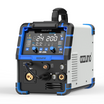
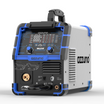
1. Azzuno MIG-135F — Best All-Around Starter Machine
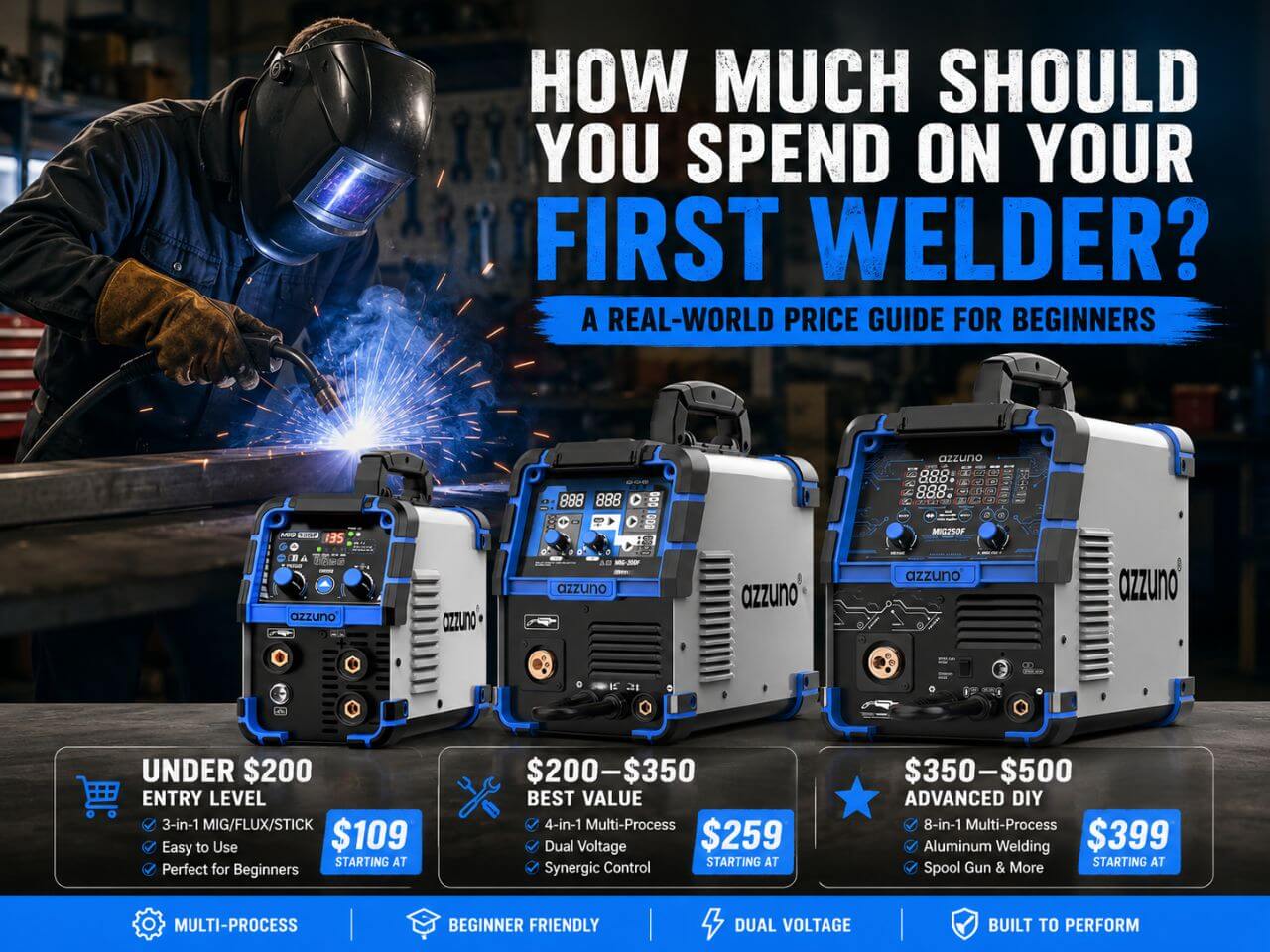
Price: ~$109.99 | 110V only | 120A max | 25% duty cycle
The MIG-135F does three things: MIG, stick, and lift TIG. It's not exceptional at any of them, but it's competent at all three, which makes it the best value for beginners who aren't sure what they'll use most.
The synergic mode works well for common wire/steel combinations. Wire speed adjusts automatically when you change voltage presets. This reduces the decision paralysis that plagues first-time buyers.
At 120A max, it handles steel up to 1/4-inch comfortably. That's enough for automotive work, trailer repairs, and most farm projects. You won't be welding 1/2-inch plate, but that's not a beginner task anyway.
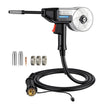
The built-in wire feeder is basic but reliable. Budget machines at this price often skip adjustable burn-back time, which causes stub-back and wire sticking. The MIG-135F includes this, and it matters.
Best for: First welder, uncertain what process you'll use most, home garage with 110V only.
Consider instead: If you need 220V for more power, look at the MIG-200F or MIG-200PRO.
2. Lincoln Electric Handy MIG — The Trusted Backup Choice
Price: ~$289 | 110V only | 140A max | 20% duty cycle
Lincoln has the best customer service in the industry and decades of brand trust. The Handy MIG is their entry-level offering, and it's solid.
The downside is older design. It's not synergic—you manually set voltage and wire speed. This is actually better for learning because you understand what each control does. Synergic modes can feel like black boxes.
The duty cycle is 20% at max output, which is slightly worse than the Azzuno. In practice, you won't notice unless you're doing long continuous beads.
Best for: Buyers who prioritize brand reputation and dealer support over features.
3. Forney Easy Weld 140 MP — Budget Multiprocess
Price: ~$219 | 110V only | 140A max | 20% duty cycle
The cheapest multiprocess option on this list. Forney is a real company with real support, not a whitebox brand. The 140 MP handles MIG, stick, and TIG (lift start only).
It's noisier than the competition and the build quality feels cheaper. But at $219, you can afford to learn on it without worrying about scratches.
The downside is fewer adjustment options. Wire speed range is narrower, which limits your wire choices. You're mostly stuck with .030 and .035 flux core or solid wire.
Best for: Budget under $250, willing to accept limitations.
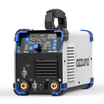
4. Azzuno MIG-250F — Best Flux Core Value
Price: ~$359.99 | 110V/220V | 250A max | 60% duty cycle
If you want the cheapest path into welding without buying gas cylinders, the MIG-250F is it. It's flux core only—no gas shielding required.
Flux core welds are uglier than gas-shielded MIG, produce more smoke, and require more cleanup. But you save $50-100 on gas setup and can weld outside in light wind.
The synergic mode is basic but functional. It covers the common .030 and .035 wire sizes for mild steel.
At 250A, it's slightly underpowered compared to the 250F. In practice, you're limited to thinner materials. Perfect for auto body patches, thin-wall tubing, and sheet metal work.
Best for: Outdoor work, budget tight, don't want gas tank hassle.
5. Hobart Handler 140 — The Longtime Favorite
Price: ~$349 | 110V only | 140A max | 20% duty cycle
Hobart has been making entry-level MIG welders for decades. The Handler 140 is refined, reliable, and boring in the best way.
The wire feed is smoother than cheaper options. The gun is more comfortable. The included regulator and hose are decent quality.
You're paying $100 more than comparable competitors for that refinement. Whether it's worth it depends on how much you'll use it. If this is a one-time project, save the money. If you see yourself welding regularly for years, the Hobart will outlast cheaper options.
Best for: Buyers who want to weld for years without upgrading.
6. Migatronic Focus 160 — European Quality, Higher Price
Price: ~$599 | 110V/220V | 160A max | 35% duty cycle
The wildcard. Migatronic is a Danish company that makes professional equipment. The Focus 160 is overkill for beginners in features but has one thing others don't: better arc quality.
The arc starts easier, burns steadier, and produces less spatter. This makes learning less frustrating. When you're fighting a finicky arc, you can't focus on technique.
It's dual voltage (110V/220V), so you can start on 110V and upgrade your garage later. The 35% duty cycle at 160A means you can actually do production work without waiting for cooling.
The price is hard to justify unless you're serious about learning to weld properly. But if you've already decided welding is a long-term skill for you, this machine won't hold you back.
Best for: Serious beginners, dual-voltage garage, willing to invest in quality.
Side-by-Side Comparison
| Welder | Price | Voltage | Max Amps | Duty Cycle | Processes |
|---|---|---|---|---|---|
| Azzuno MIG-135F | $109 | 110V | 120A | 25% | MIG, Stick, TIG |
| Lincoln Handy MIG | $289 | 110V | 140A | 20% | MIG only |
| Forney 140 MP | $219 | 110V | 140A | 20% | MIG, Stick, TIG |
| Azzuno MIG-250F | $359 | 110V/220V | 250A | 60% | Flux Core ,Gas MIG, Gasless MIG, Stick |
| Hobart Handler 140 | $349 | 110V | 140A | 20% | MIG only |
| Migatronic Focus 160 | $599 | 110V/220V | 160A | 35% | MIG, Flux, Stick |
Common Beginner Questions
Do I need gas for MIG welding?
Traditional MIG welding requires shielding gas (typically 75% argon/25% CO2 for mild steel). Gas improves arc stability, reduces spatter, and produces cleaner welds. However, flux core wire doesn't need gas—it generates its own shielding from the flux core. If you're on a budget or need to weld outdoors, flux core is the answer. If you want the best possible welds, gas-shielded MIG is worth the extra setup cost.
What thickness can a beginner MIG welder handle?
With a 120-140A machine on 110V, you're limited to materials 1/8-inch to 1/4-inch thick. Thinner materials (under 1/8-inch) are actually harder to weld because heat builds up fast. Start with 1/8-inch to 3/16-inch steel plate. That's thick enough to see what you're doing, thin enough to weld without massive heat input.
How long does it take to learn MIG welding?
Most people can make decent looking welds after 10-20 hours of practice. Getting consistently good welds that pass visual inspection takes 40-100 hours. Learning to weld different positions (vertical, overhead) adds more time. Plan for a 3-6 month learning curve before you're comfortable with most projects.
Should I buy new or used?
New for your first welder. Used welders may have worn consumables, uncertain service history, and no warranty. MIG welders are relatively simple machines, but hidden problems (bad wire feed motor, failing circuit board) aren't visible. Budget for new and consider it an investment.
What consumables do I need to start?
At minimum: welding wire (match to your material), contact tips, and a pair of auto-darkening welding helmet. You can buy consumable kits for $30-50. Don't cheap out on the helmet—poor visibility or slow response time causes real injuries.
My Recommendation for Most Beginners
Start with the Azzuno MIG-135F . It's not the cheapest, but it's the best balance of capability and price.
You get three processes to experiment with, synergic settings that prevent early frustration, and build quality that won't quit after 20 hours. At $109, it's not a huge risk if welding doesn't stick as a hobby.
Don't buy more welder than you need. Most beginners overestimate how much power they'll use. 120A is enough for 95% of what you'll do in a home garage. Save the money and invest it in a better helmet and safety gear.
Next Steps
Once you've got your machine, practice on scrap metal before starting real projects. 1/8-inch plate is ideal for practice beads. Focus on consistent travel speed first—wobbling hands produce wavy, weak welds. Gun angle second. Once those feel natural, start experimenting with settings.
If you want to learn more about the differences between welding processes, see our guide to Flux Core vs MIG Welding. And if you're considering more advanced equipment, our Multi-Process Welder comparison covers machines that grow with your skills.
About the author: This guide is based on manufacturer specifications and verified user experiences. Product recommendations are made independently and reflect current market availability as of June 2026.

Leave a comment
This site is protected by hCaptcha and the hCaptcha Privacy Policy and Terms of Service apply.