



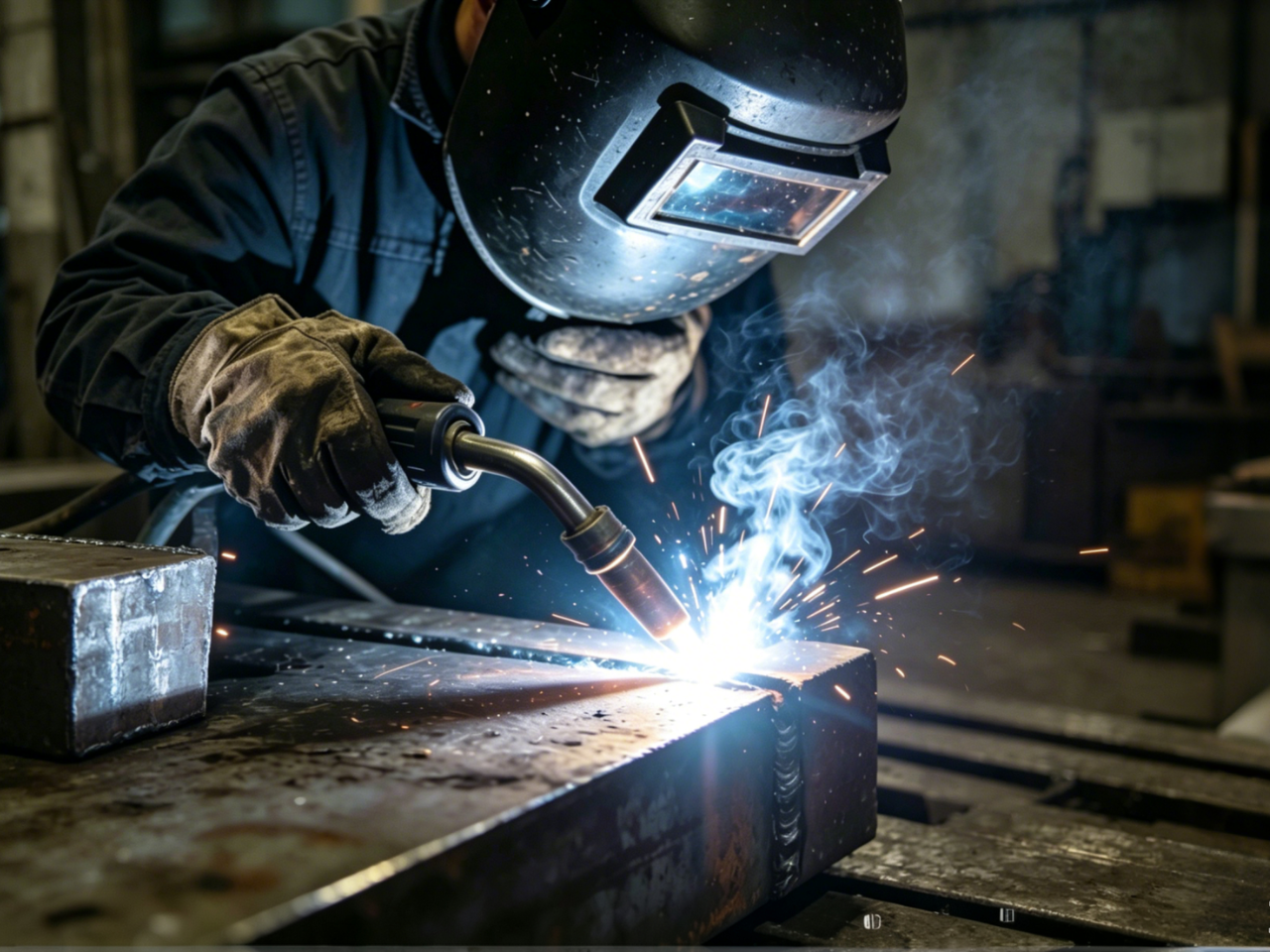
Choosing between a flux core welder and a MIG welder isn't just about brand preference—it's about matching your work environment, material types, and quality requirements to the right process. Both methods use similar equipment with fundamentally different approaches to shielding the weld pool, and the wrong choice can mean frustrating spatter, porosity, or weak joints.
This guide breaks down the technical differences, practical applications, and real-world performance so you can decide with confidence.
What Is Flux Core Welding and How Does FCAW Work Without Shielding Gas?

Flux core arc welding (FCAW) uses a tubular wire electrode filled with flux compounds—mixtures of minerals, alloys, and binders that serve multiple protective functions during welding.
The flux core generates its own shielding through three mechanisms:
-
Gas Generation: When the arc heats the flux, it releases protective gases (primarily CO and CO₂) that shield the molten weld pool from atmospheric oxygen and nitrogen.
-
Slag Formation: The flux creates a molten slag layer that floats on top of the weld pool, protecting it during cooling and forming that must be chipped away after welding.
-
Deoxidation: Flux compounds remove impurities like rust and mill scale by trapping them in the slag, reducing porosity in the final weld.
Self-Shielded vs. Dual-Shield FCAW
Not all flux core welding works the same way. Understanding the difference matters for your application:
-
Self-Shielded FCAW (FCAW-S) : Relies entirely on the flux core for protection. No external gas cylinder required. Ideal for outdoor work and windy conditions. Common wire classifications include E71T-11 and E71T-GS.
-
Dual-Shield FCAW (FCAW-G) : Uses both flux core AND external shielding gas (typically 75% Argon / 25% CO₂). Produces cleaner welds with better arc stability but requires gas equipment. Better suited for indoor or controlled environments.
For most home users and field work, self-shielded flux core welding offers the portability and versatility without the logistics of gas tanks.
Flux Core vs MIG Welding: Key Differences at a Glance

The core distinction between these processes comes down to one thing: how the weld pool gets protected from the atmosphere.
| Feature | Flux Core Welder (FCAW) | MIG Welder (GMAW) |
|---|---|---|
| Shielding Method | Flux core generates protective gas + slag | External shielding gas (100% CO₂ or Ar mix) |
| Gas Tank Required | No (self-shielded) / Optional (dual-shield) | Yes, mandatory |
| Wire Type | Tubular flux-cored wire | Solid wire (ER70S-6 for mild steel) |
| Deposition Rate | 8-15 lbs/hour (up to 15+ lbs/hr with FCAW-G) | 3-8 lbs/hour |
| Outdoor Performance | Excels in wind up to 35 mph (FCAW-S) | Requires wind shields; gas easily displaced |
| Weld Appearance | Rough bead; requires slag removal | Clean, smooth bead; minimal cleanup |
| Spatter Level | 5-8% typical | 2-4% typical |
| Equipment Cost | $150-$500 (entry) / $800-$2,000 (professional) | $300-$800 (entry) / $1,000-$4,000 (professional) |
| Material Thickness Range | 18 gauge to 1+ inch | 24 gauge to 1/2 inch (typical 110V) |
| Post-Weld Cleanup | Slag removal required | Minimal to none |
Key Technical Insight: Flux core welding typically achieves deposition rates 40-60% higher than MIG welding on the same amperage. For thick materials (3/8" and above), this translates to significantly faster completion times. FCAW-S can handle materials from 18 gauge up to 1 inch thick, while 110V MIG welders typically cap out around 3/16" to 1/4".

When to Choose Flux Core Welding for Your Projects
Flux core welding excels in specific scenarios where MIG welding struggles. Here are the conditions where a flux core welder becomes the clear choice:
Outdoor and Field Work
Self-shielded FCAW-S doesn't care about wind. The flux generates its own protective barrier, meaning you can weld on a windy job site without gas tanks or wind shields. Construction sites, farm repairs, fence installation, and structural work in open air all favor flux core.
Thick Material Welding
When you're welding plate steel, trailer frames, or structural members over 1/4" thick, flux core's higher deposition rate (up to 15 lbs/hr vs. 8 lbs/hr for MIG) means faster completion with deeper penetration. The slag also helps support the weld pool on thick materials.
Dirty or Unprepared Metal
Flux core handles surface contamination better than MIG. Rust, mill scale, and light paint don't require the same level of prep. The flux cleans the weld pool and traps impurities in slag rather than creating porosity.
Portability and Quick Setup
No gas cylinder means a flux core welder weighs less and sets up faster. For jobs where you're moving between locations or need to start quickly, FCAW-S eliminates the gas logistics entirely.
Cost Efficiency on Large Projects
While flux-cored wire costs more per pound than solid MIG wire, the higher deposition rate means less labor time. For production welding on thick materials, FCAW often wins on total cost.
When MIG Welding Delivers Better Results
Despite flux core's versatility, MIG welding remains the preferred choice in many situations. Here's when to stick with (or switch to) a traditional MIG setup:
Indoor Shop Work with Clean Materials
In a controlled environment with prepared metal, MIG produces superior weld quality with cleaner appearance and minimal spatter. Auto body work, fabrication shops, and precision manufacturing typically prefer MIG.
Thin Materials and Sheet Metal
MIG welding with short-circuit transfer excels on thin gauge materials (22 gauge to 1/8"). The lower heat input and controllable arc prevent burn-through on delicate parts. Automotive body panels, HVAC ductwork, and custom motorcycle parts benefit from MIG's finesse.
Aesthetic and Cosmetic Welds
If the weld will be visible and appearance matters, MIG wins. The smooth, clean bead requires no slag removal and minimal grinding. Decorative work, custom fabrication with visible welds, and applications where post-weld appearance is evaluated favor GMAW.
Aluminum and Stainless Steel Work
Standard FCAW doesn't handle aluminum well. MIG with the appropriate shielding gas (100% Argon for aluminum, Tri-Mix for stainless) produces better results on these materials. For shops working with aluminum trailers, stainless railings, or marine applications, MIG is essential.
Learning Curve Considerations
MIG welding has a gentler learning curve for absolute beginners. The forgiving arc, consistent wire feed, and visual feedback of shielding gas coverage make it easier to produce acceptable welds quickly. New welders often find MIG's "plug and play" nature less frustrating than tuning FCAW parameters.
Flux Core Welders in 2026: Best Models for Beginners and Professionals
Whether you're upgrading your shop or buying your first machine, these flux core welders represent the best options across price points and experience levels:

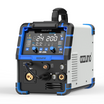
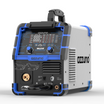
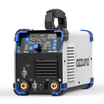
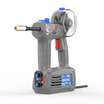
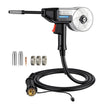
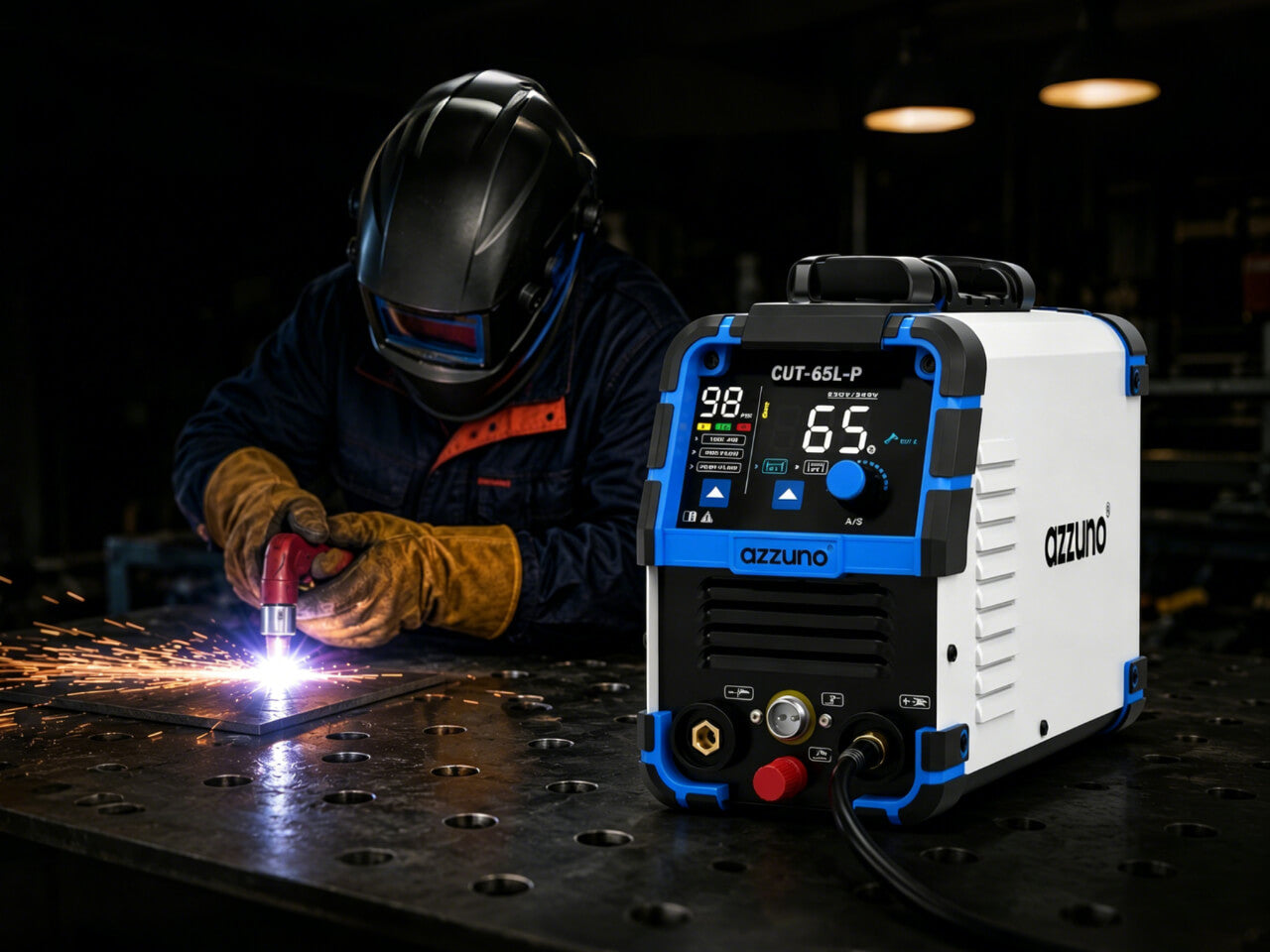
AZZUNO offers both flux core and MIG welder models in these power ranges, designed for users who want reliable performance at competitive price points.
Frequently Asked Questions About Flux Core Welding
Does flux core welding require gas?
Self-shielded flux core welding (FCAW-S) does not require external shielding gas. The flux inside the wire generates protective gases as it burns. Dual-shield FCAW (FCAW-G) uses external gas alongside the flux core for improved weld quality.
Can flux core welds be as strong as MIG welds?
Yes, properly executed flux core welds meet the same strength specifications as MIG welds. Both processes can achieve AWS-certified weld quality when parameters are set correctly and the work is properly prepared.
What thickness can a flux core welder handle?
Most flux core welders handle materials from 18 gauge (0.048") up to 1 inch thick or more. Professional FCAW equipment with higher amperage can weld plate steel in structural applications.
Is flux core welding harder to learn than MIG?
Flux core requires slightly more parameter tuning than MIG with synergic settings. However, self-shielded FCAW eliminates gas setup variables, which can simplify the learning process for field work.
What wire do you use for flux core welding?
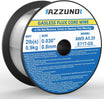
Common classifications include E71T-11 (self-shielded, all positions) and E71T-1 (gas-shielded, fast-freeze). E71T-GS is a common general-purpose self-shielded wire. Match your wire to your base metal and application.
Can you use flux core wire in a MIG welder?
Yes, if your MIG welder supports DC polarity (most do) and accepts the wire diameter. FCAW wire requires the same DCEP (direct current electrode positive) polarity as solid MIG wire.
How do you prevent porosity in flux core welding?
Porosity typically results from excessive wind disturbance, moisture in the wire, or incorrect voltage settings. Keep FCAW-S wire dry, avoid welding in extreme wind without wind shields, and verify your voltage is within the wire manufacturer's recommended range (typically 18-28V for most self-shielded wires).
The Bottom Line: Flux Core or MIG for Your Workshop?
Choose a flux core welder if you:
- Work outdoors or in field conditions
- Primarily weld thick materials (1/4" and up)
- Need portability and quick setup
- Work with dirty or unprepared metal
- Value production speed over weld appearance
Choose a MIG welder if you:
- Work in a controlled indoor shop
- Weld thin materials or need cosmetic appearance
- Work with aluminum or stainless steel
- Want the easiest learning curve
- Need clean, minimal-post welds
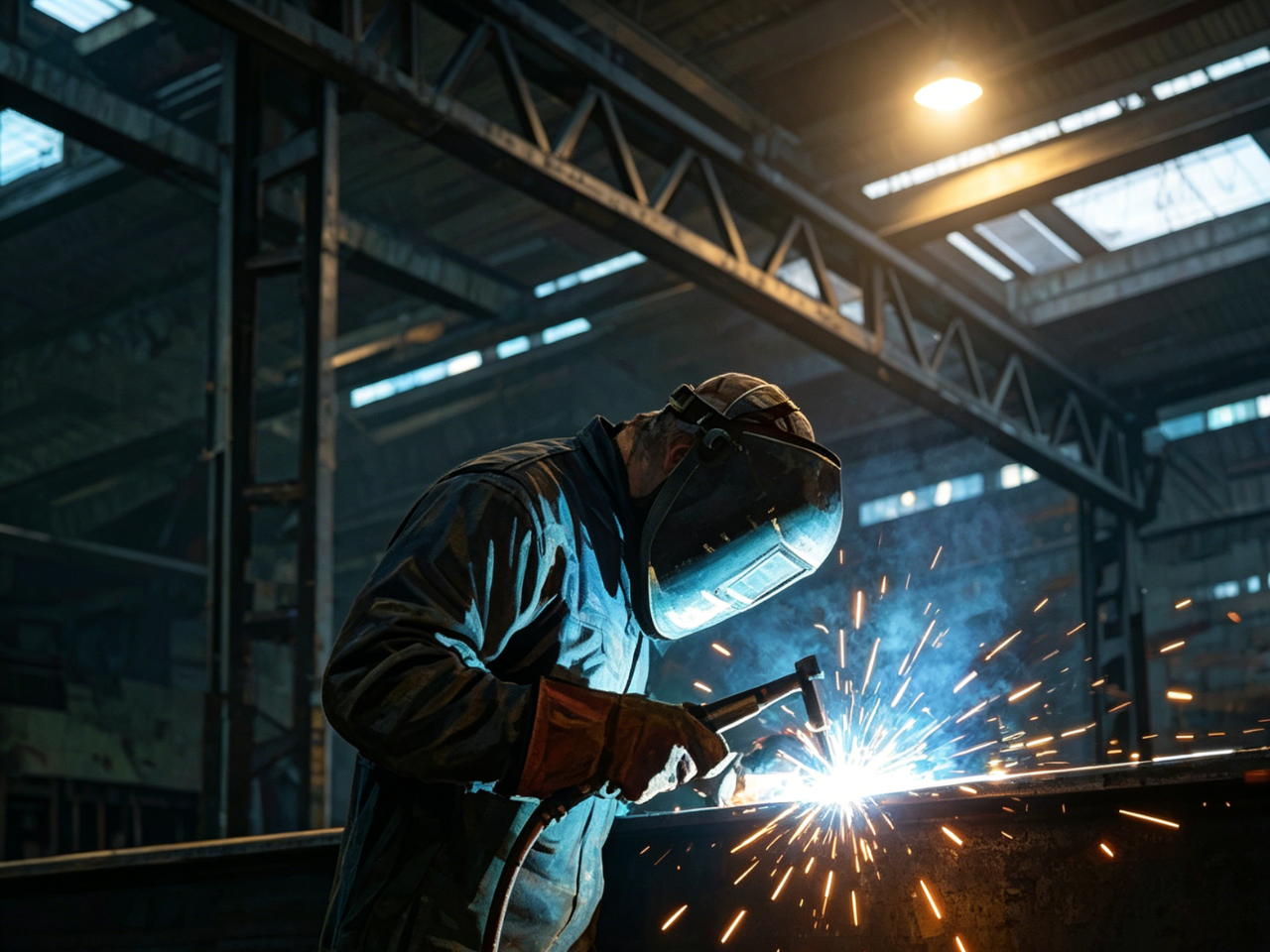
Many shops end up with both: a flux core welder for field work and thick materials, and a MIG setup for precision indoor work. AZZUNO carries both process types across multiple power levels, so you can build a setup that matches your actual work rather than forcing one process to do everything.

Leave a comment
This site is protected by hCaptcha and the hCaptcha Privacy Policy and Terms of Service apply.